Monday, August 10, 2026
GPT Live Goes Continuous — OpenAI's Real-Time Voice Interaction Just Got Hands-Free
Posted by
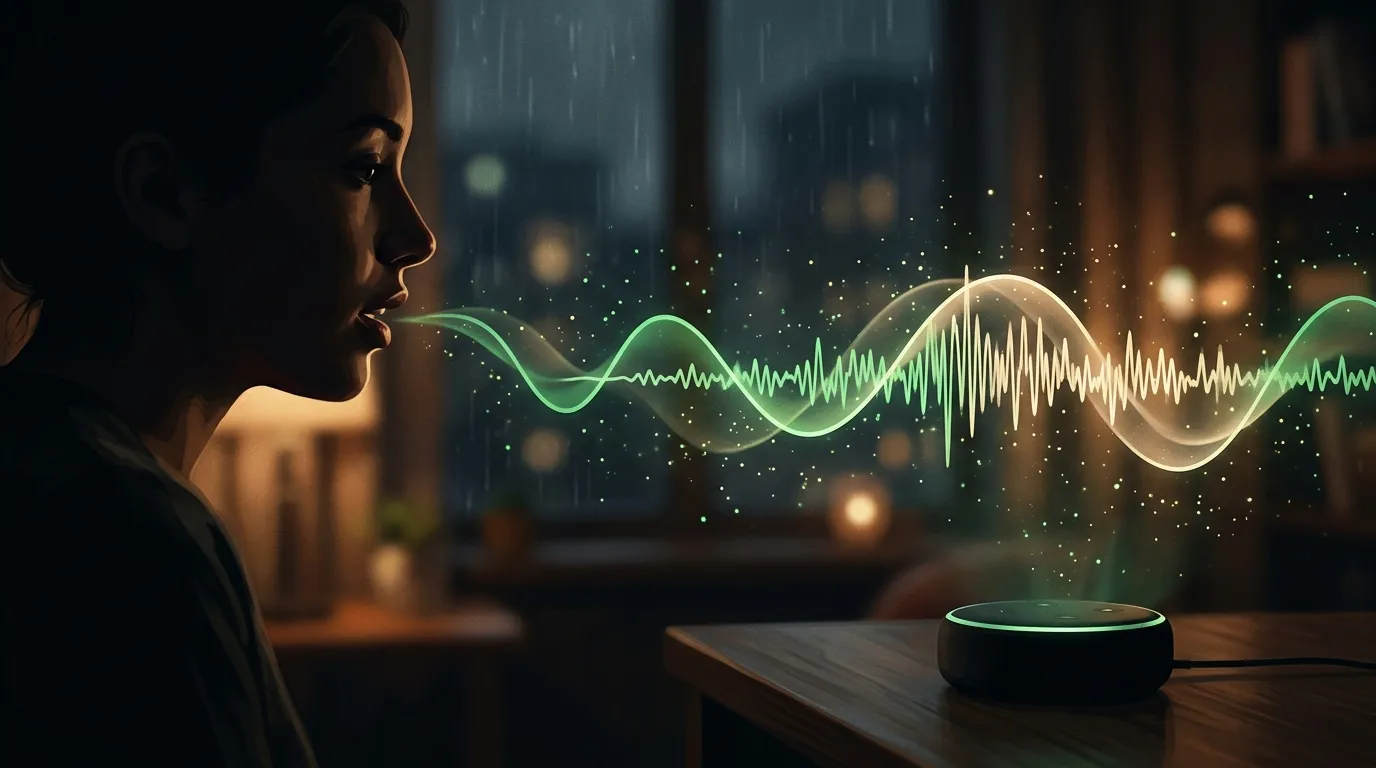
OpenAI published the engineering behind continuous voice interaction with GPT Live this week — the capability that lets you keep talking to the assistant hands-free, without pressing-to-talk or waiting for a turn boundary.
What "Continuous" Changes
Earlier voice assistants worked on a turn model: you talk, it responds, you talk again. GPT Live's continuous mode removes the artificial boundaries — the assistant tracks the full conversation state and can interject, clarify, or respond at natural speaking pauses while you keep going.
For practical use this is the difference between dictating into a walkie-talkie and having a conversation. It's the missing piece for voice as a work interface rather than a novelty.
The Engineering Signal
The OpenAI engineering post is worth reading for what it reveals about real-time agent systems:
- Streaming state management — keeping a coherent conversation context across an unbounded stream of audio is harder than it looks; it's the same class of problem as streaming/realtime patterns for APIs.
- Interruption handling — the system has to decide when a pause is a turn boundary versus a mid-sentence hesitation. That decision is what makes continuous voice feel natural or annoying.
- Latency budget — continuous interaction tightens the end-to-end latency budget, pushing models and infrastructure toward faster first tokens and incremental streaming.
This is the same set of constraints that voice-agent builders have wrestled with in every modality — see gemini audio-speech prompting and streaming real-time for the API-side patterns.
What It Means for Voice Agents
If you're building voice agents, continuous mode is the UX bar now. Users who experience GPT Live's hands-free flow won't accept strict push-to-talk from your product. The technical takeaways:
- Design for interleaving — the agent must handle user speech overlapping its own output.
- Build pause detection with hysteresis — short silences inside sentences aren't boundaries; only longer ones are.
- Keep state across turns — a continuous session is one long conversation, not many short ones.
The Bigger Picture
OpenAI shipping this in the ChatGPT product — and publishing the engineering — signals that voice is becoming a first-class agent interface, not an accessibility extra. Combined with computer-use agents and multimodal models, the trajectory is clear: assistants you talk to, that can see and act. Continuous voice is one of the steps that makes that feel like software instead of magic.
Source: OpenAI — Continuous voice interaction with GPT Live.
Related Articles & Deep Dives
 #openai
ChatGPT Plugins Failed Because the Models Weren't Ready — Brockman's Admission and What It Means for the Agent Era
Greg Brockman publicly admitted ChatGPT plugins 'didn't work at all because the models weren't ready.' Now he's betting on a no-interface agent future. Here's what that admission says about OpenAI's trajectory — and the industry's.
 #deepseek
DeepSeek Harness: Everything Is a Plugin
DeepSeek Harness (dsh) is DeepSeek's MIT-licensed agent runtime where everything is a plugin — the four presets, setup, and what it means for benchmark trust.
 #gemini
Gemini 3.7 Flash: The Workhorse Gets Smarter and Cheaper
Gemini 3.7 Flash ships three weeks after 3.6 Flash with big coding and agent gains at half the price. FrontierCode, DeepSWE, AutomationBench, and what changed.