Midjourney Natural Landscape Prompts: Photorealistic Nature Scenes
Create stunning natural landscapes in Midjourney with photorealistic prompts. Master mountains, coastlines, forests, deserts, and seasonal variations with atmospheric depth.
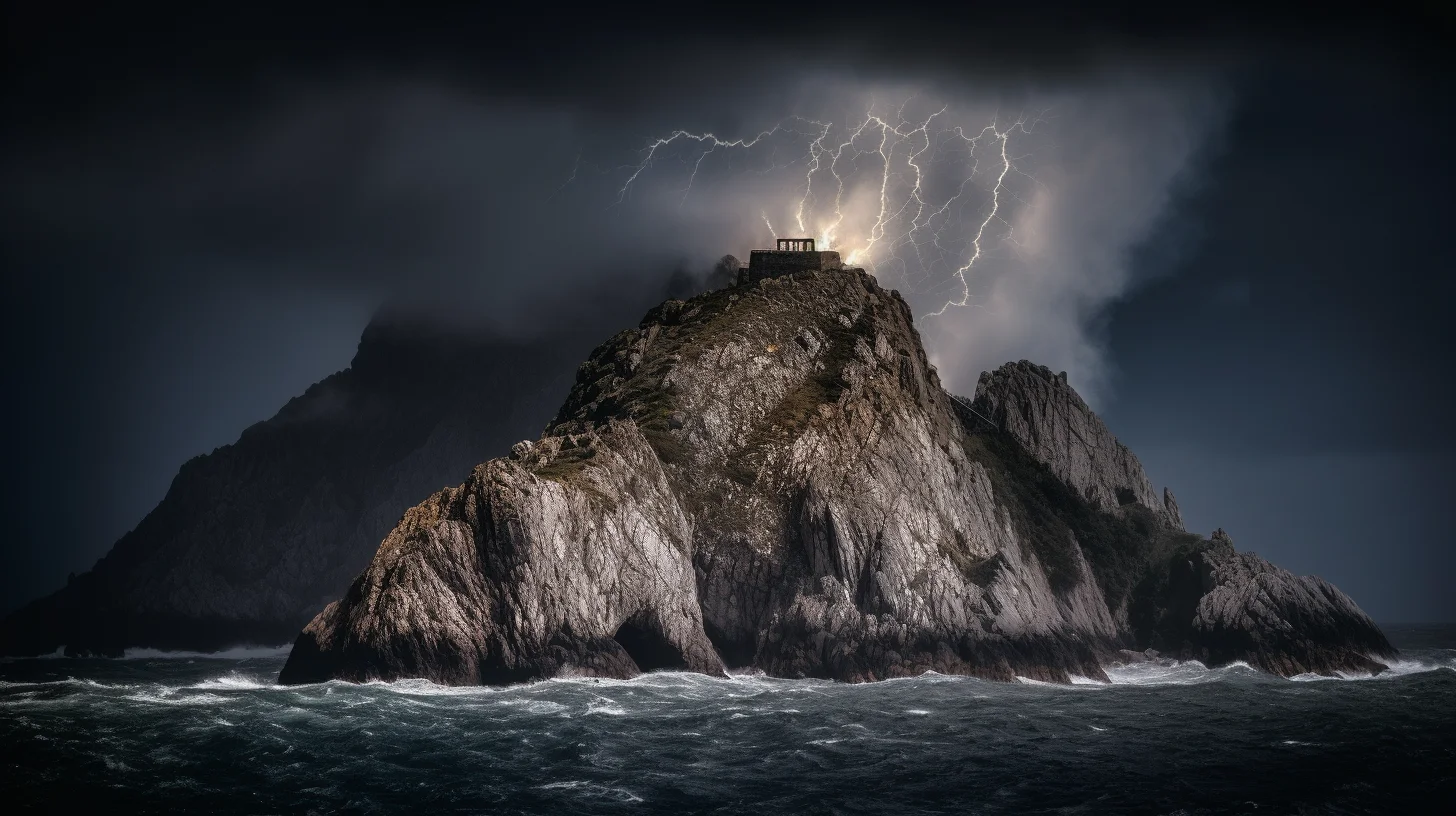
Midjourney excels at rendering photorealistic natural landscapes with proper atmospheric perspective, lighting physics, and environmental detail. The key to success is building depth through layered composition (foreground/midground/background), specifying atmospheric conditions that create believable haze and light scattering, and using photographic language to control exposure and focus.
Understanding Landscape Composition
Natural landscapes require spatial depth to feel immersive. You must specify three distinct layers (near detail, middle transition, distant atmosphere), lighting direction and quality (time of day, weather), and scale indicators (trees, rocks, wildlife) that help the viewer understand size relationships. Without this structure, Midjourney generates flat, postcard-like scenes.
Core Landscape Categories
Mountain & Alpine
Coastal & Oceanic
Forest & Canyon
Desert & Plains
Atmospheric & Seasonal
Landscape-Specific Parameters
Landscape-Specific Parameters
Note:
Photorealistic landscapes require layered depth (foreground, midground, background), atmospheric perspective (natural haze), and specific lighting conditions (golden hour, blue hour) combined with low stylize values and --style raw.
Mountain Landscape
Alpine environments showcase dramatic elevation changes, snow coverage, and atmospheric depth as mountains recede into haze.
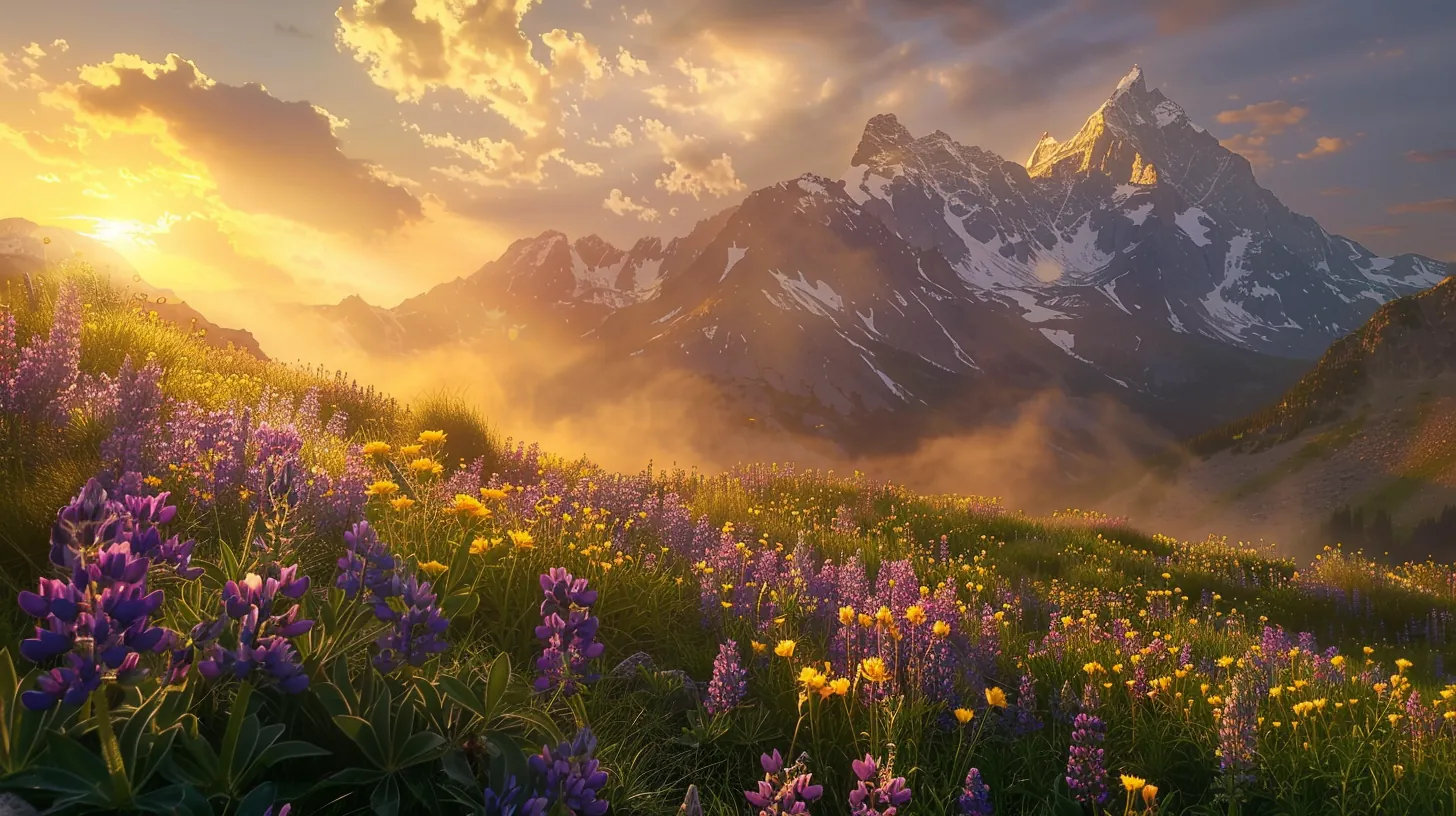
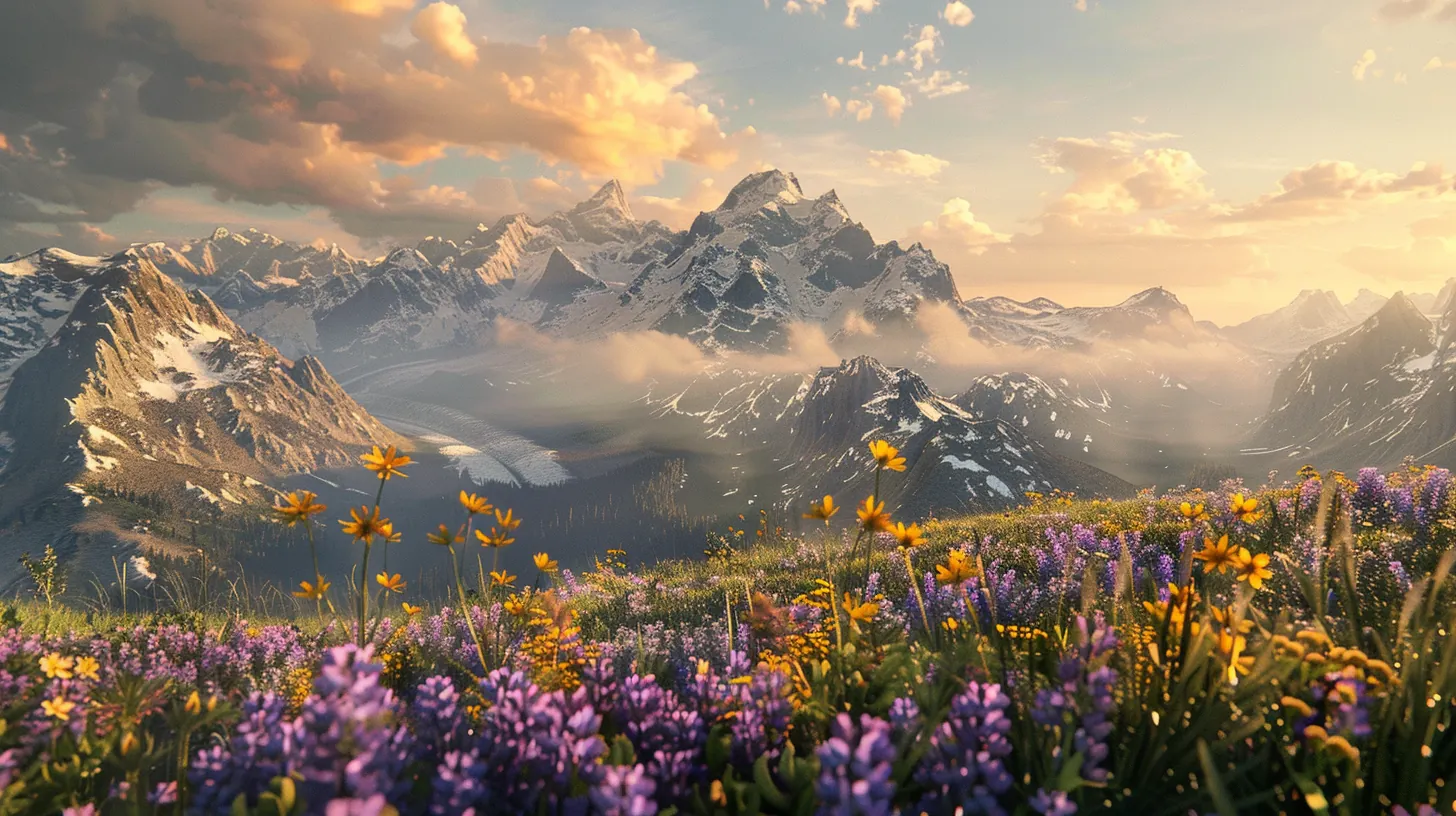
Create an epic alpine mountain landscape at golden hour. Environment: - **Foreground**: Wildflower meadow with purple lupines and yellow buttercups, rocky outcroppings - **Midground**: Pine forest treeline transitioning to rocky slopes - **Background**: Snow-capped jagged peaks fading into atmospheric haze - **Sky**: Dramatic cumulus clouds with god rays breaking through Atmosphere: - **Lighting**: Warm golden hour backlight creating rim lighting on peaks - **Weather**: Clear with wispy high-altitude clouds - **Effects**: Volumetric light rays, atmospheric perspective, gradient haze - **Color Palette**: Warm golds, cool blues in shadows, vibrant wildflowers Technical: - **Style**: Professional landscape photography, National Geographic quality - **Camera**: Wide-angle lens (24mm), f/16 for deep depth of field - **Focus**: Sharp foreground detail, progressive softness toward distance --ar 16:9 --v 6 --q 2
Key Techniques:
- Layer three distinct depth planes (foreground → midground → background) for spatial depth
- Use "atmospheric haze" and "progressive softness" for photorealistic aerial perspective
- Specify lighting quality with photography terms like "golden hour backlight" and "rim lighting"
- Reference camera terminology (24mm wide-angle, f/16) to control depth of field
- Include specific flora details (lupines, buttercups) for foreground scale and color
Coastal Landscape
Coastlines combine dramatic rock formations, water dynamics, and expansive sky to create powerful natural compositions.
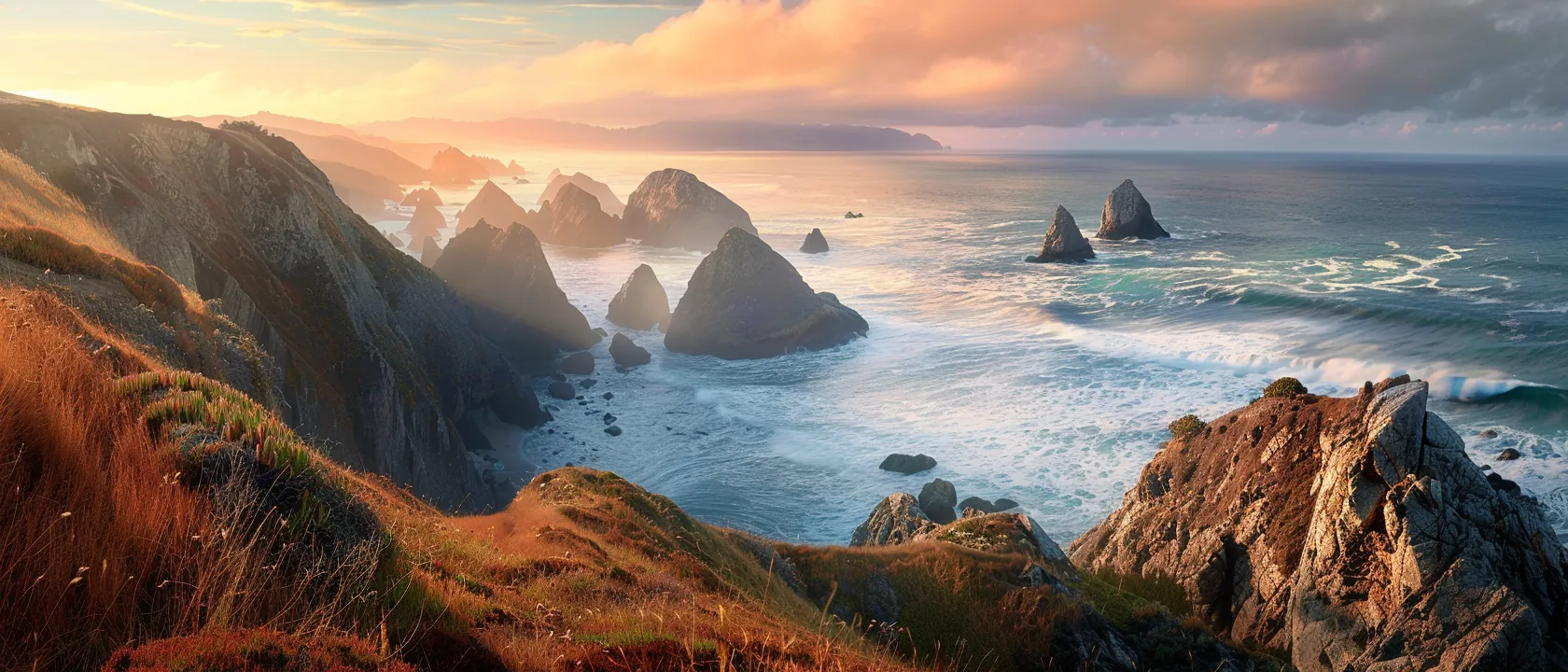
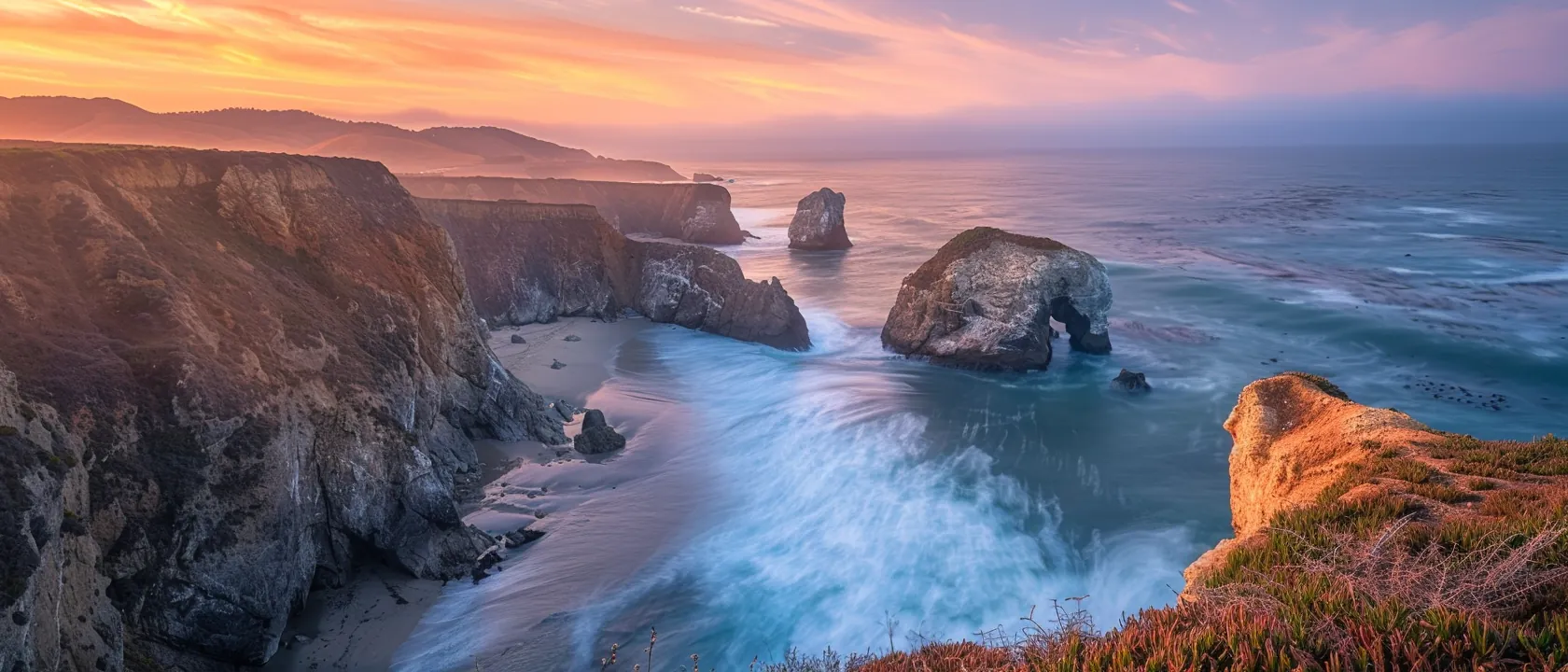
Create a dramatic coastal cliff landscape at sunset. Environment: - **Foreground**: Rugged cliff edge with weathered rock formations and coastal grasses - **Midground**: Tall sea stacks rising from ocean, waves crashing with white spray - **Background**: Layered coastal headlands fading into misty distance - **Water**: Turquoise-to-deep-blue ocean with foam patterns and wave motion Atmosphere: - **Lighting**: Warm sunset glow from low angle, backlit sea spray creating halo effect - **Weather**: Partly cloudy with dramatic cloud formations catching sunset colors - **Effects**: Sea mist, backlit spray, gradient sky from orange to purple - **Mood**: Powerful, wild, dramatic yet serene Technical: - **Style**: Fine art landscape photography, long exposure water effect - **Camera**: Telephoto compression (70mm), low angle emphasizing cliff height - **Details**: Sharp rock texture, silky water motion, rich color gradients --ar 21:9 --v 6 --q 2 --style raw
Key Techniques:
- Specify water behavior ("crashing waves," "white spray," "foam patterns") for dynamic motion
- Use "backlit sea spray creating halo effect" for dramatic light interaction
- Reference "telephoto compression" to flatten perspective and layer distant headlands
- Include "long exposure water effect" for signature silky seascape photography look
- Layered headlands fading into distance creates natural depth recession
Forest Landscape
Forest environments rely on dappled light, depth through tree trunks, and atmospheric fog to create mystery and scale.
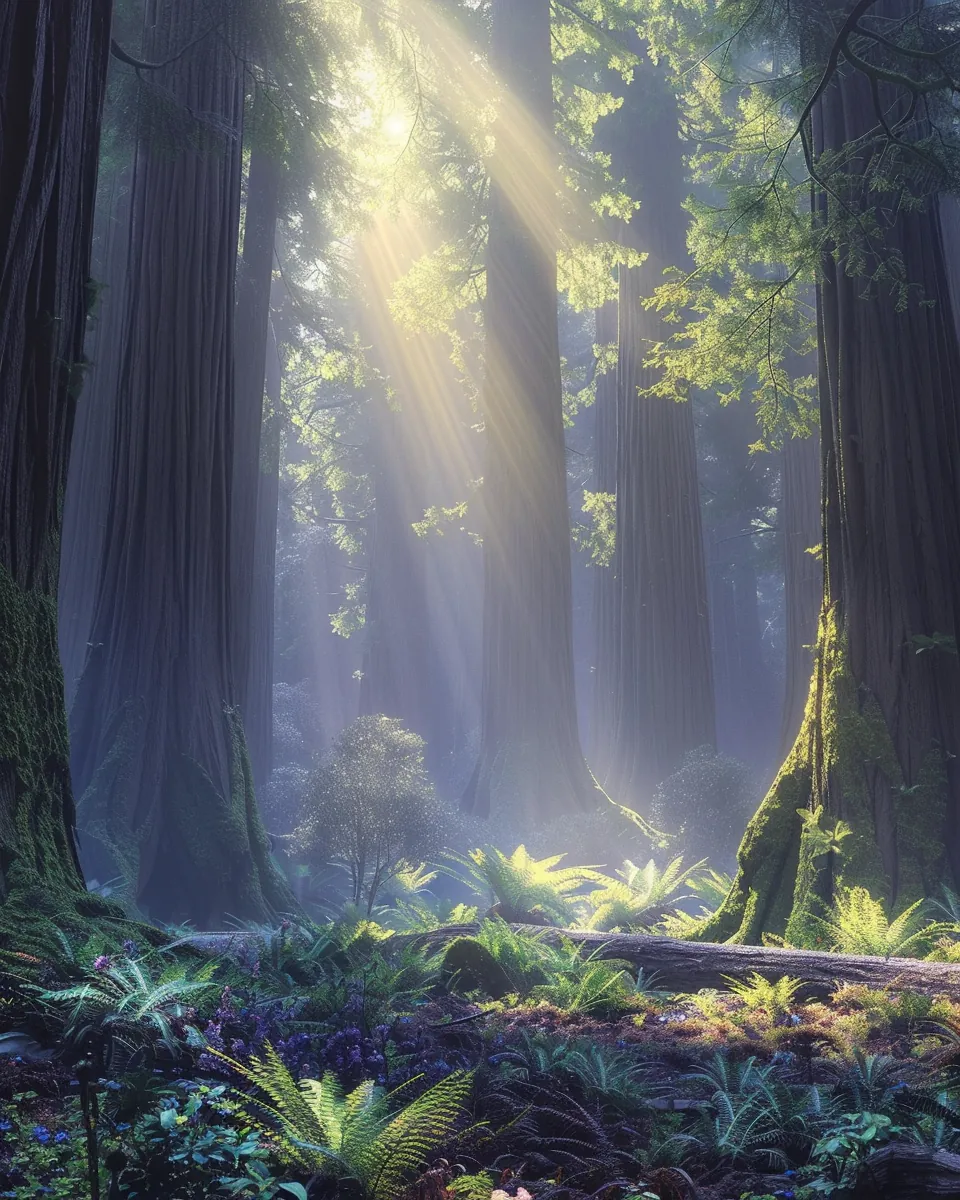
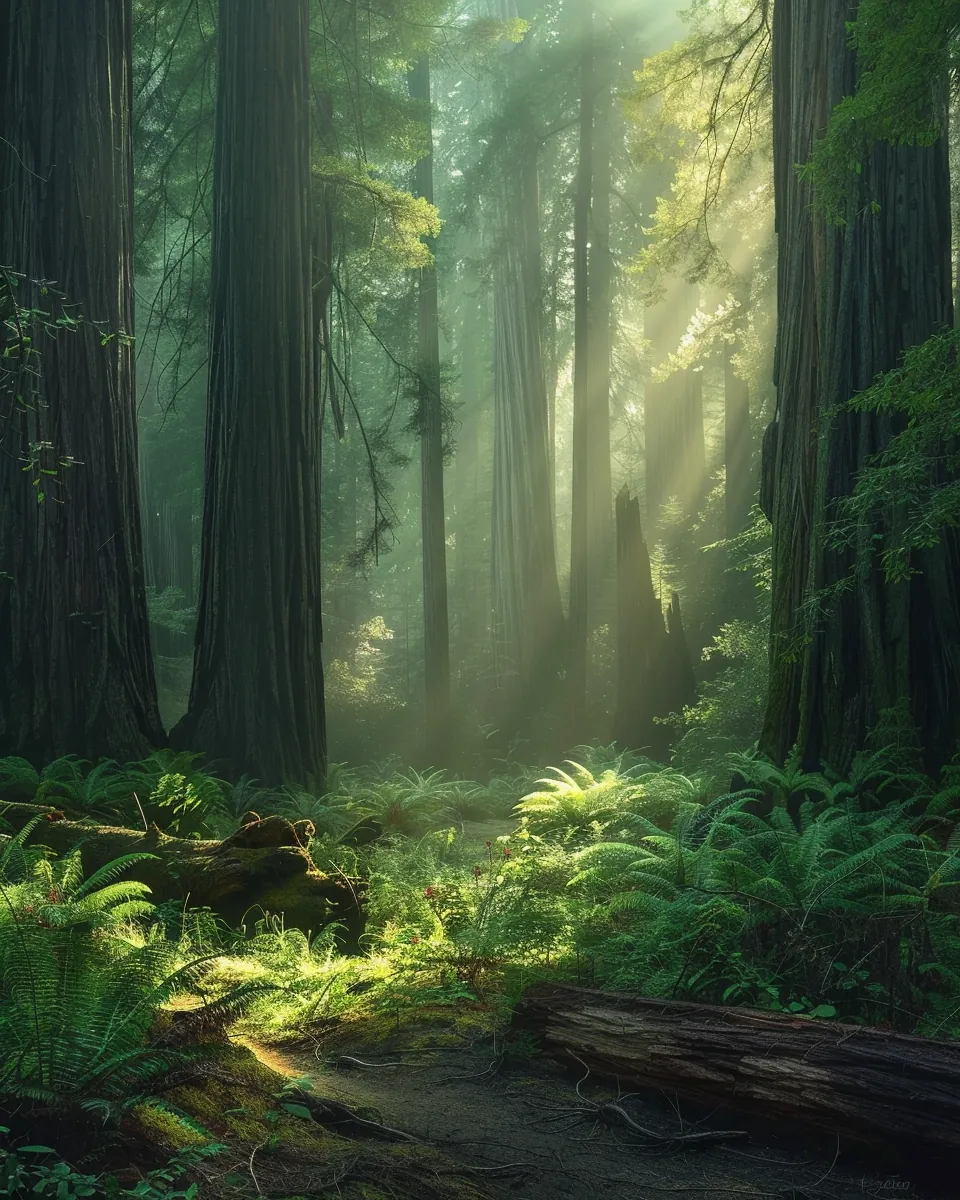
Create an ancient redwood forest scene at dawn. Environment: - **Foreground**: Forest floor with moss-covered fallen logs, sword ferns, scattered wildflowers - **Midground**: Massive redwood trunks receding into depth, varied spacing - **Background**: Forest depth with morning mist obscuring distant trees - **Canopy**: Tall canopy with filtered sunlight creating light shafts Atmosphere: - **Lighting**: Soft dawn light with dramatic god rays piercing canopy - **Weather**: Morning mist at ground level, humid atmosphere - **Effects**: Volumetric light beams, atmospheric scattering, soft diffusion - **Color Palette**: Rich greens, warm amber light rays, cool blue shadows Technical: - **Style**: Cinematic nature photography, Terrence Malick aesthetic - **Camera**: 50mm standard lens, medium depth of field (f/8) - **Details**: Bark texture on trunks, dust motes in light beams, layered depth --ar 4:5 --v 6 --q 2
Key Techniques:
- Specify "varied spacing" of tree trunks to avoid monotonous repetition
- Use "morning mist obscuring distant trees" for natural atmospheric fade
- Include "god rays piercing canopy" with "soft diffusion" to avoid overprocessed look
- Detail ground cover ("sword ferns," "moss-covered logs") for scale and organic texture
- "Volumetric light beams" creates that signature forest atmosphere
Desert Landscape
Desert scenes emphasize minimalism, vast scale, dramatic geology, and extreme light quality.
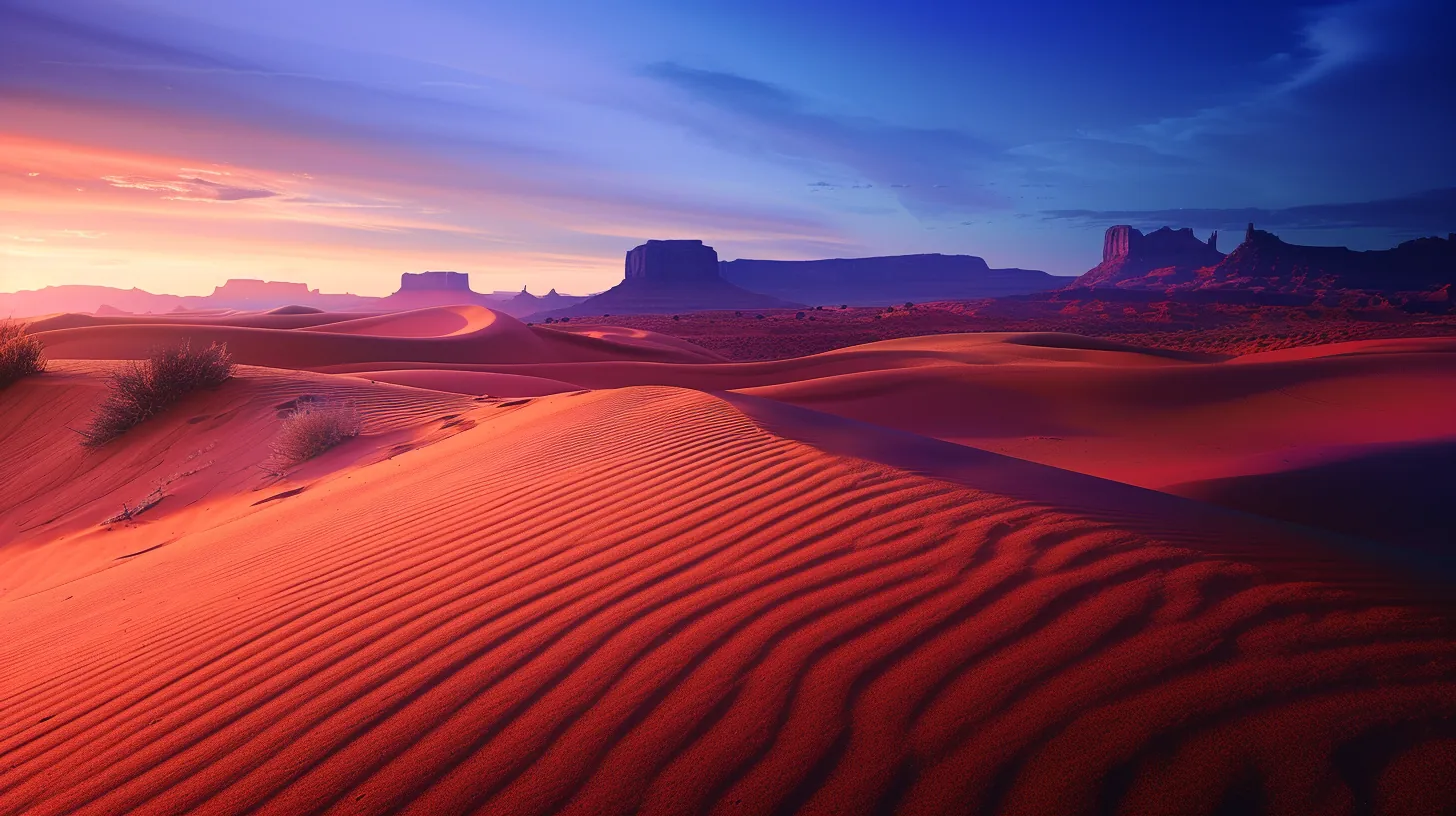
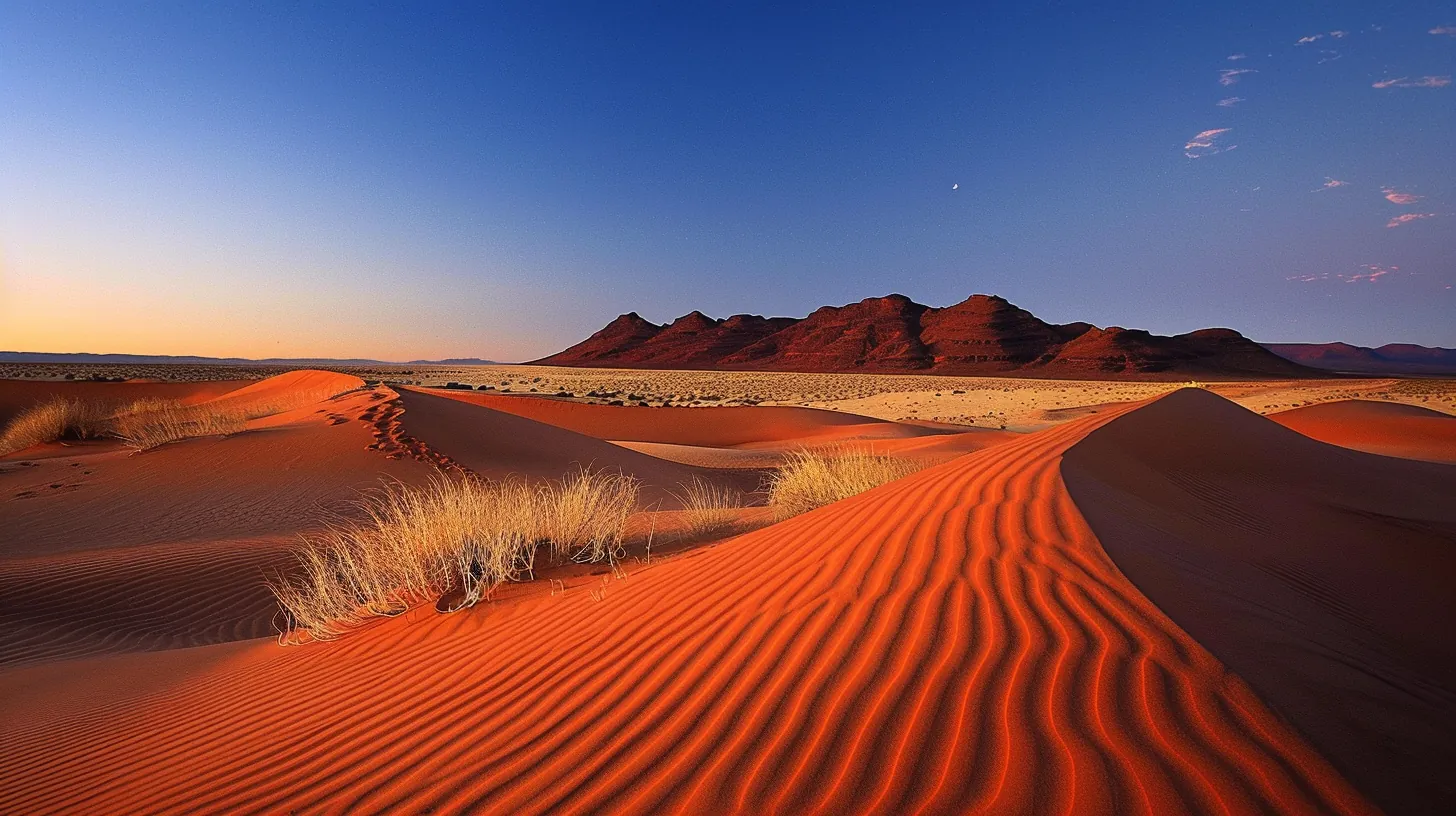
Create a vast desert dune landscape at blue hour twilight. Environment: - **Foreground**: Rippled sand texture with sparse desert grass, small rocks casting shadows - **Midground**: Towering red sand dunes with sharp ridge lines and wind-carved shapes - **Background**: Distant mesa formations silhouetted against twilight sky - **Sky**: Clear gradient from deep blue overhead to warm orange at horizon Atmosphere: - **Lighting**: Blue hour twilight with soft ambient light, no direct sun - **Weather**: Crystal clear, dry atmosphere with perfect visibility - **Effects**: Long shadows from dune ridges, gradient color on sand faces - **Color Palette**: Deep reds and oranges in sand, cool blues in shadows Technical: - **Style**: Fine art desert photography, minimalist composition - **Camera**: Wide-angle perspective emphasizing dune scale and sky - **Details**: Sharp sand ripple texture, clean dune ridge lines, atmospheric clarity --ar 16:9 --v 6 --q 2 --style raw
Key Techniques:
- Desert landscapes work through contrast: "sharp ridge lines" vs "soft ambient light"
- "Blue hour twilight" provides even lighting revealing dune form through subtle gradients
- "Rippled sand texture" in foreground adds tactile detail to minimal composition
- "Crystal clear atmosphere" emphasizes absence of haze, opposite of humid environments
- Deep color contrasts (reds/oranges vs blues) create dramatic but natural palette
Jungle Landscape
Tropical rainforest environments combine dense layered vegetation, high humidity atmosphere, and complex light filtering through multiple canopy levels.
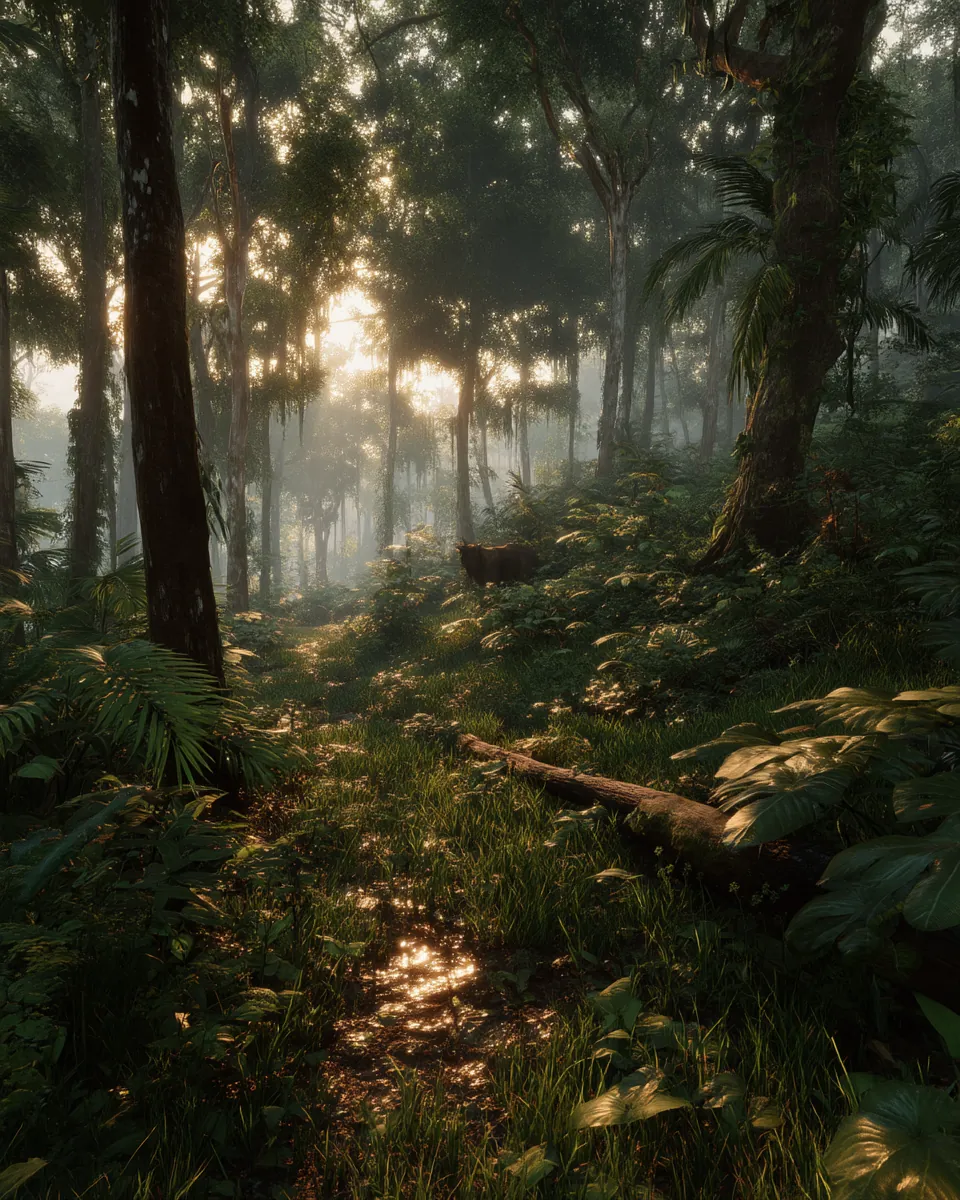
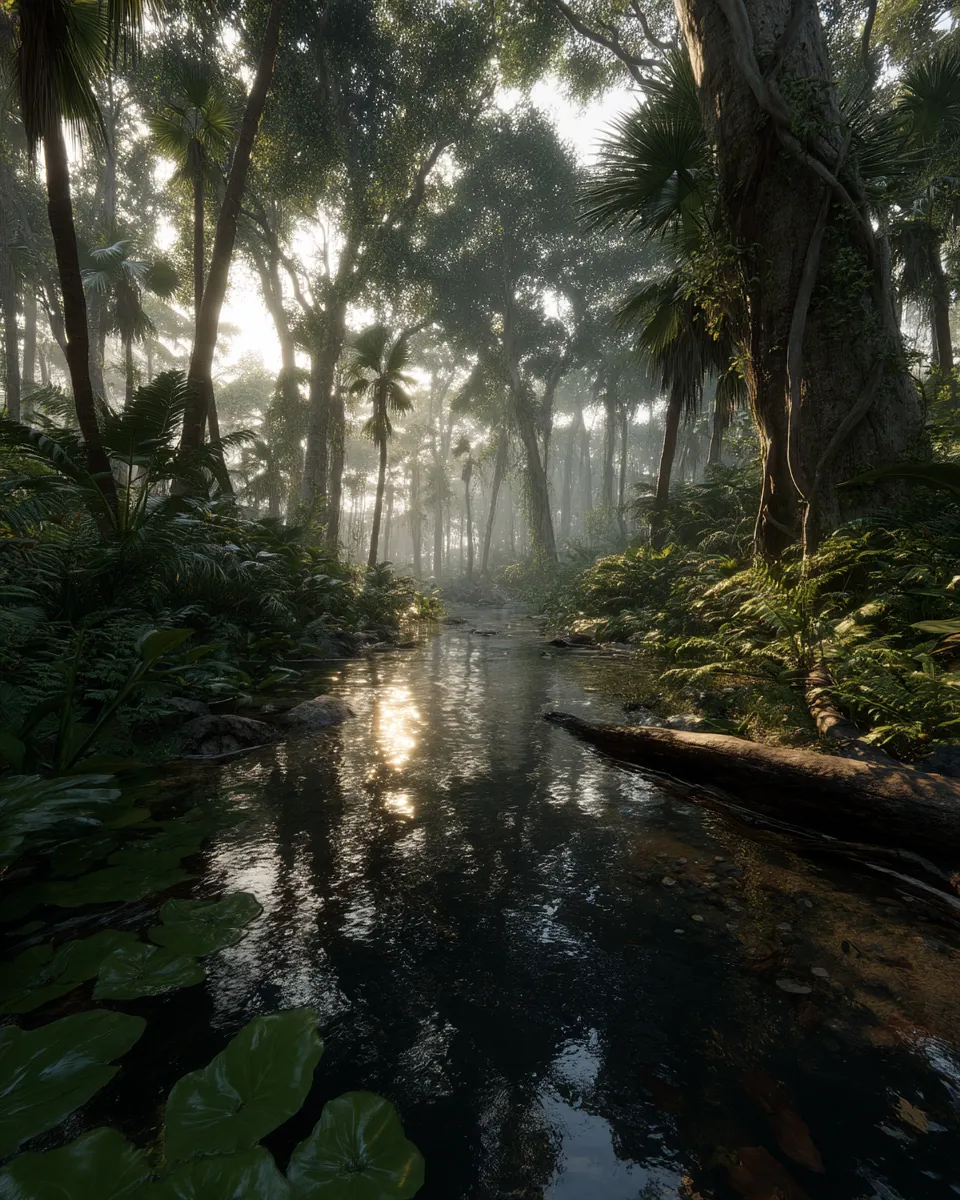
Create a lush tropical jungle landscape at early morning. Environment: - **Foreground**: Dense fern undergrowth with elephant ear plants, moss-covered fallen logs, wet leaf litter reflecting light - **Midground**: Massive buttressed tree trunks with vines, varied spacing creating depth, epiphytic plants clinging to bark - **Background**: Layered canopy receding into misty atmospheric fade, emergent trees breaking through canopy layer - **Canopy**: Triple-layer canopy (understory, mid-canopy, emergent) with filtered light penetrating gaps Atmosphere: - **Lighting**: Soft golden morning light filtering through canopy, creating dappled patterns and scattered beams - **Weather**: High humidity with morning mist rising from forest floor, moisture visible in air - **Effects**: Volumetric god rays piercing canopy gaps, atmospheric scattering, water droplets on vegetation catching light - **Color Palette**: Rich saturated greens from lime to deep emerald, warm golden highlights, cool blue-green shadows Technical: - **Style**: National Geographic tropical photography, cinematic atmosphere - **Camera**: 35mm lens for natural perspective, medium depth of field (f/5.6) with soft background - **Details**: Varied leaf textures (broad, pinnate, compound), light interaction with moisture, layered depth through vegetation --ar 4:5 --style raw --s 150 --q 2 --chaos 20
Key Techniques:
- Jungle landscapes require multiple vegetation layers: "ground cover → understory → mid-canopy → emergent trees"
- Specify botanical diversity with precise terms: "elephant ear plants," "epiphytes," "buttressed trunks"
- Use "high humidity atmosphere" and "morning mist rising" for tropical moisture characteristic
- "Dappled light" and "volumetric god rays" create signature jungle light quality
- Rich color saturation with "lime to deep emerald greens" captures tropical vibrancy
- Add
--chaos 20for natural organic variation in dense vegetation patterns
Winter Landscape
Snow-covered environments require attention to light quality, snow texture, and the muted color palette of winter.
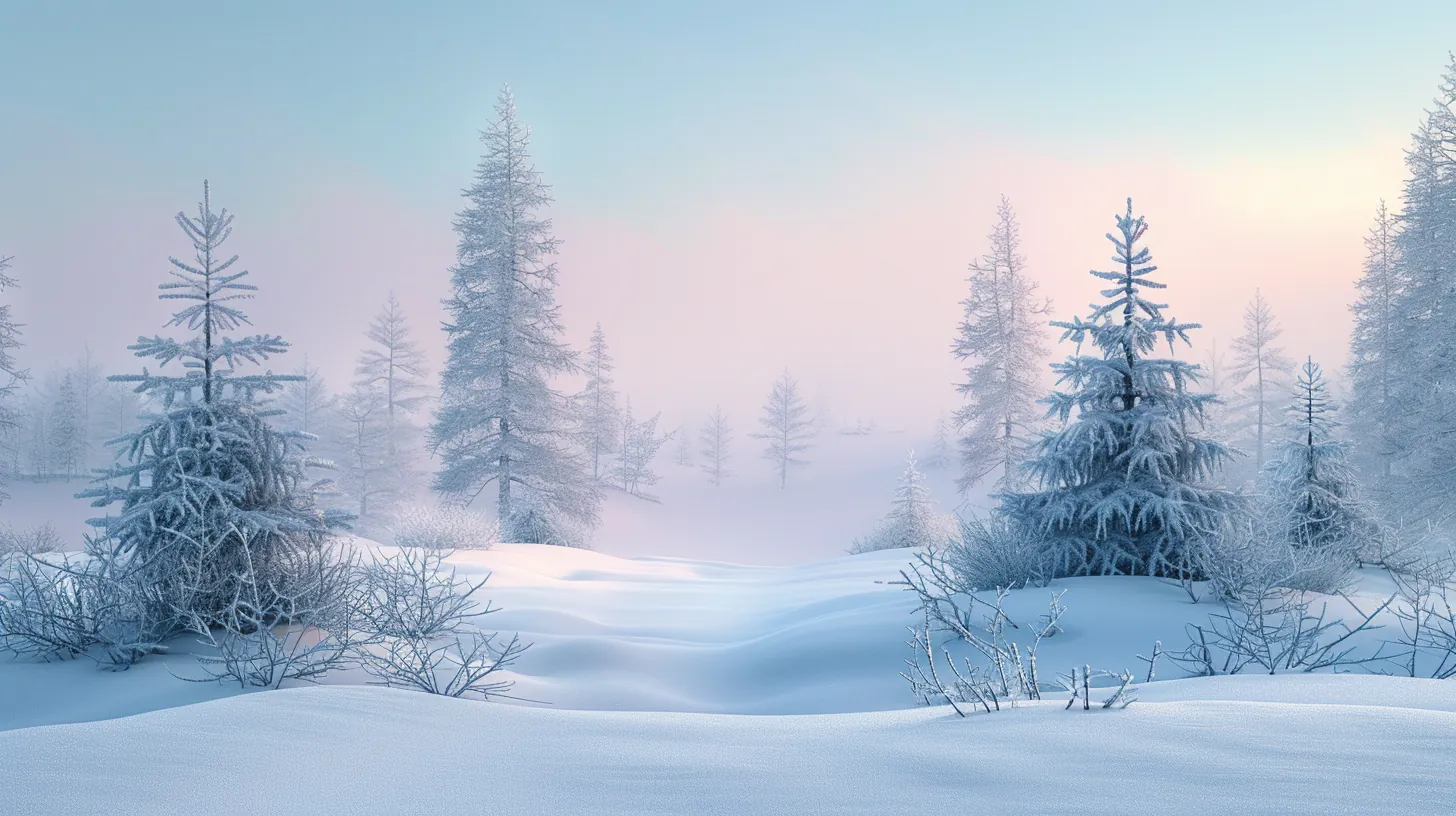
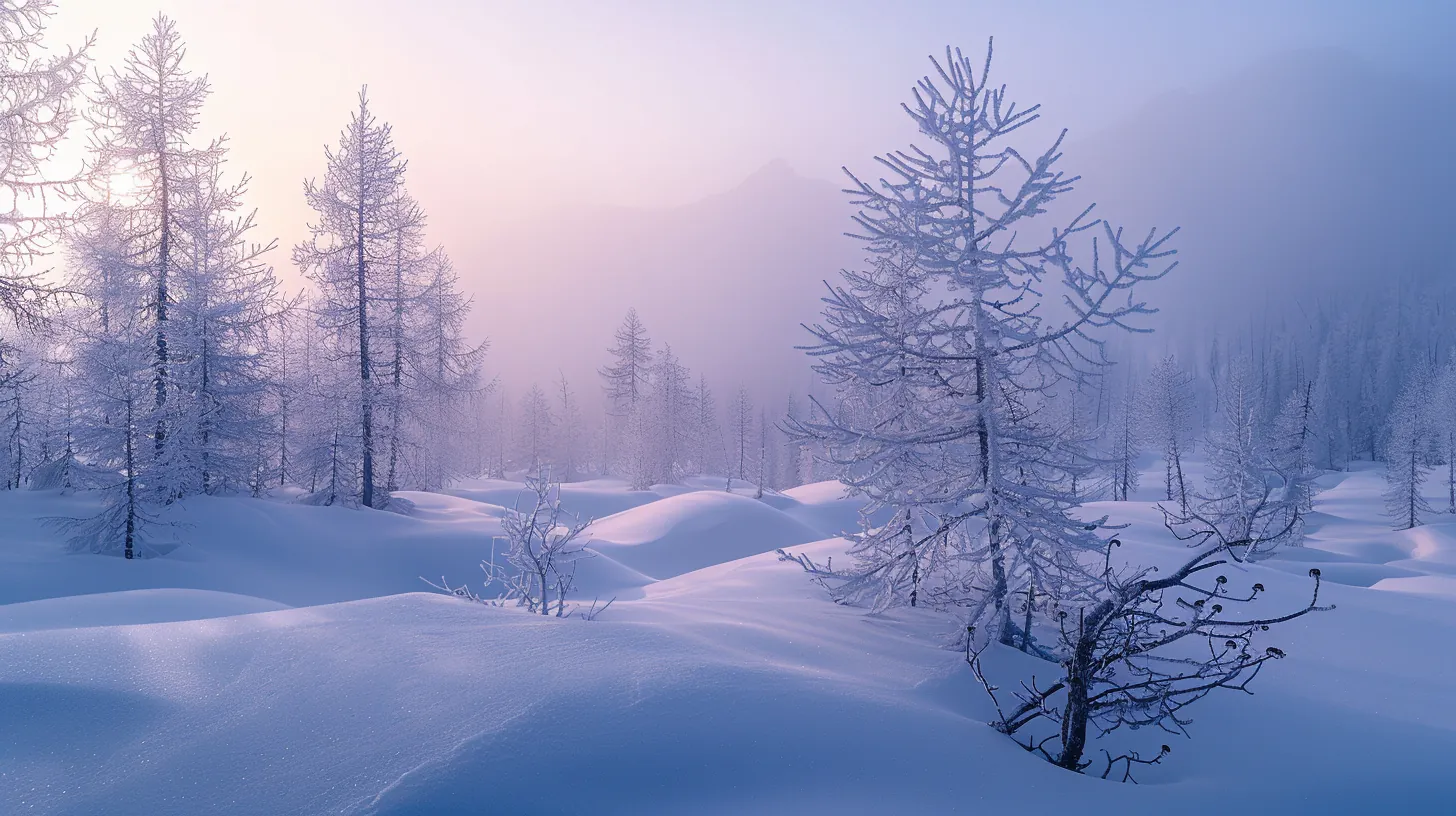
Create a pristine winter forest landscape at twilight. Environment: - **Foreground**: Untouched snow drifts with subtle texture, small evergreen saplings - **Midground**: Snow-laden conifer forest with ice-covered branches - **Background**: Fog-obscured forest depths fading to white - **Sky**: Soft twilight blue hour with fading light Atmosphere: - **Lighting**: Cool blue twilight with subtle warm glow on horizon - **Weather**: Still air after snowfall, light fog settling in valleys - **Effects**: Soft diffused light, subtle shadows on snow texture - **Color Palette**: Cool blues and lavenders, stark whites, grey-blue shadows Technical: - **Style**: Fine art winter photography, serene minimalism - **Camera**: Standard lens with high dynamic range capturing snow detail - **Details**: Snow crystal texture, frost on branches, subtle color gradients --ar 16:9 --v 6 --q 2 --style raw
Key Techniques:
- Specify "untouched snow drifts" and "subtle texture" to avoid flat white appearance
- Use "blue hour twilight" for the classic cool blue light that makes snow magical
- Include "fog-obscured forest depths" to create atmospheric fade without distant mountains
- Add "frost on branches" for micro-detail that catches light
- Winter color palettes need "cool blues and lavenders" rather than pure white/grey
Advanced Techniques
Atmospheric Perspective Control
Master depth through atmospheric physics simulation. Landscapes gain realism when distant elements fade naturally through haze.
Mountain vista with atmospheric depth:
- **Foreground**: Sharp detail, high contrast, saturated colors
- **Midground**: Slightly reduced contrast, subtle color desaturation
- **Background**: Atmospheric haze, cool blue tint, soft edges
- **Sky**: Progressive lightening toward horizon
--ar 16:9 --style raw --q 2
Key Terms for Atmospheric Depth:
- "Aerial perspective" - Natural color/contrast reduction with distance
- "Atmospheric haze" - Visible moisture particles creating depth fade
- "Progressive softness toward distance" - Controlled focus fall-off
- "Gradient haze layers" - Multiple depth planes with varying opacity
- "Cool blue atmospheric tint" - Physics-accurate color shift in distance
Use --style raw to ensure natural atmospheric behavior rather than stylized fog effects.
Depth Layering Methodology
Structure landscapes in three distinct planes with specific elements anchoring each layer.
Foreground Layer (0-30 feet):
- Include tactile details: rocks, wildflowers, grass texture, fallen logs
- Use specific flora names (lupines, buttercups, sword ferns) for variety
- Add scale indicators: "small wildflowers," "moss-covered stones"
- Maintain sharp focus and high texture detail
Midground Layer (30-500 feet):
- Transitional elements: tree lines, ridges, water features, rock formations
- Specify "receding into depth" or "varied spacing" to avoid repetition
- Include depth cues: "overlapping pine trees," "layered ridges"
- Slightly softer detail than foreground
Background Layer (500+ feet):
- Distant features: mountain peaks, headlands, forest depths
- Always include atmospheric fade: "fading into haze," "silhouetted against sky"
- Use elevation language: "distant peaks," "far horizon," "background mountains"
- Soft edges and muted colors
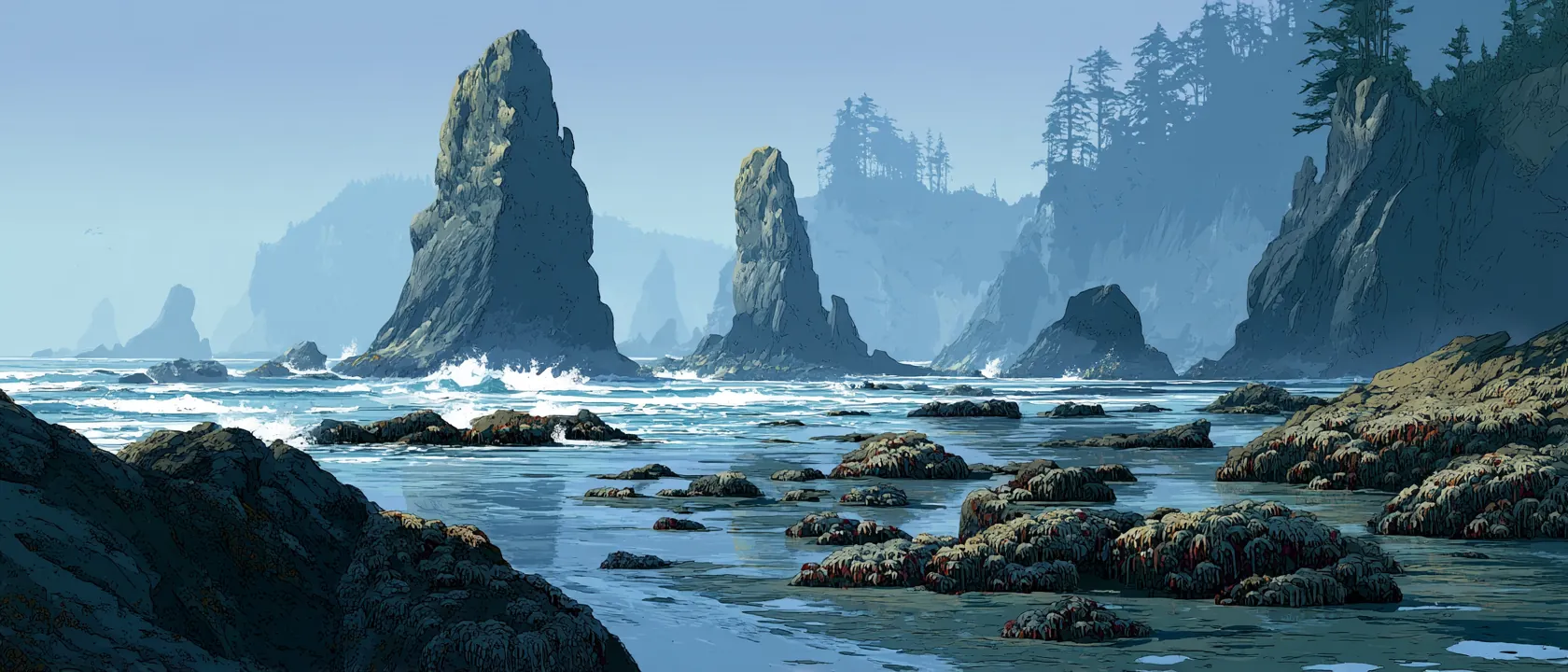
Three-layer coastal composition: Foreground: Rocky tide pools with sea anemones and barnacles, sharp detail, wet rock texture reflecting sky. Midground: Tall sea stacks rising from ocean with white spray, waves crashing around bases, foam patterns. Background: Layered coastal headlands fading into misty distance, cool blue atmospheric tint, soft silhouettes --ar 21:9 --style raw --s 150 --q 2
Focal Point & Composition
Direct viewer attention through classical composition techniques adapted for AI generation.
Rule of Thirds Placement:
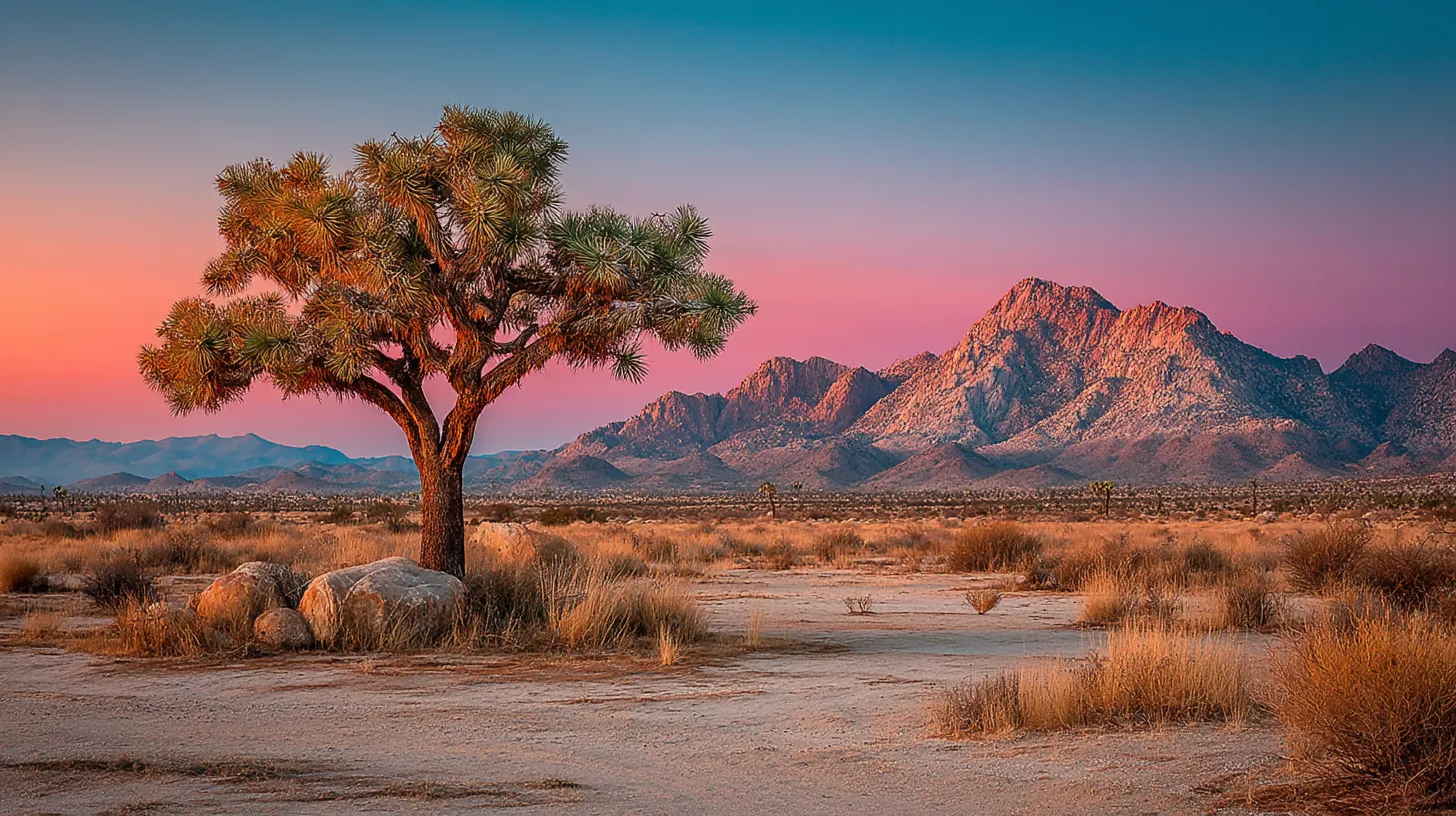
Desert landscape with rule of thirds focal point: Lone Joshua tree positioned at right third intersection, horizon line at lower third creating 2:1 sky-to-land ratio, leading dune ridge from bottom left toward tree, gradient twilight sky with warm-to-cool color transition --ar 16:9 --style raw --q 2
Leading Lines:
- Rivers, paths, ridges, fence lines, dune patterns
- Specify direction: "winding from foreground to middle distance"
- Use phrases like "S-curve composition," "diagonal leading line"
- Combine with depth: "trail receding into forest depths"
Natural Framing:
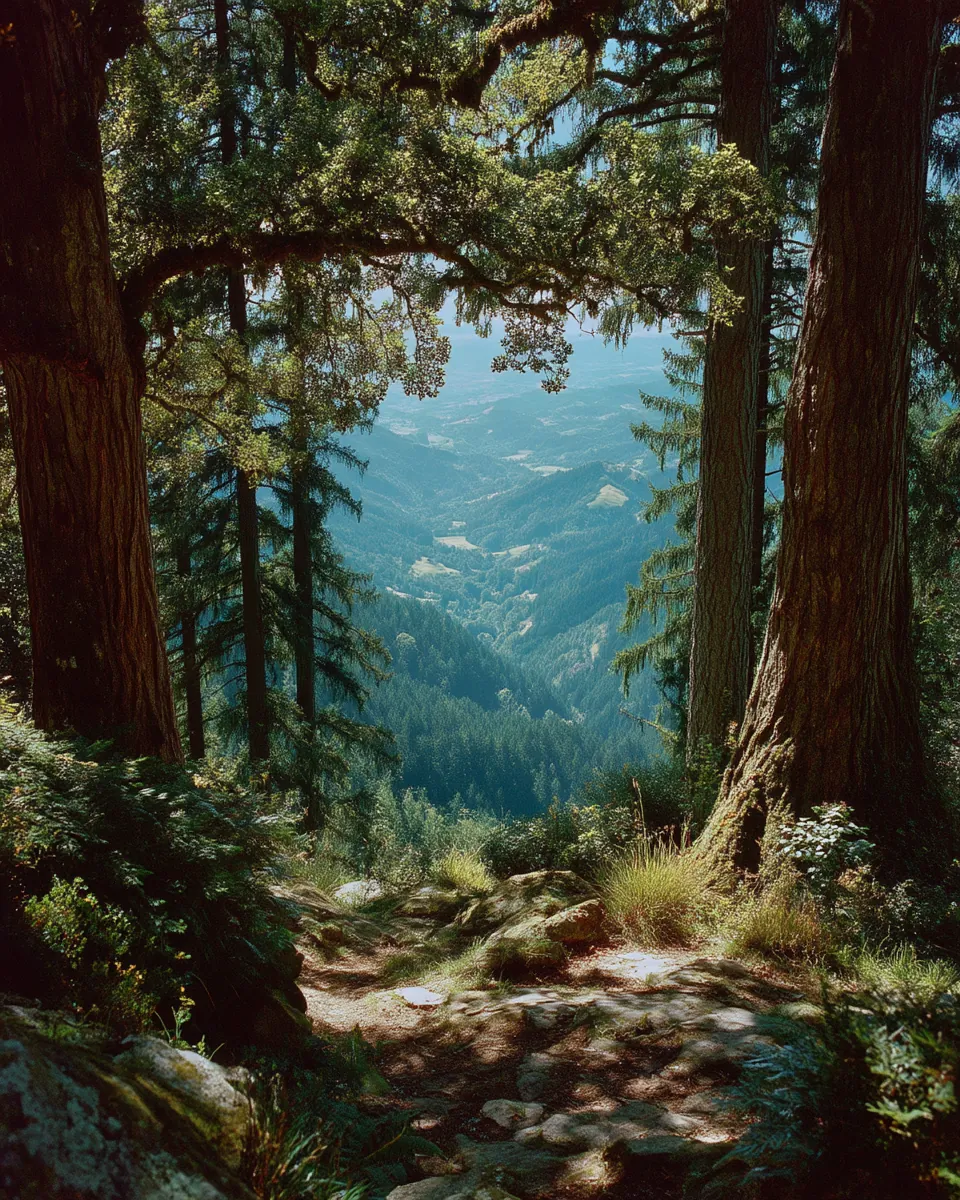
Forest vista framed by foreground trees: Two tall redwood trunks framing left and right edges, opening revealing distant valley with atmospheric perspective, dappled light creating depth through shadow patterns, natural vignette effect from dark tree silhouettes --ar 4:5 --style raw --q 2
Scale & Focal Interest:
- Add human scale references: "lone hiker," "distant cabin," "single tree"
- Use isolation: "solitary element" creates instant focal point
- Specify placement: "positioned at golden ratio intersection"
- Contrast elements: "lone autumn tree among evergreens"
Color Grading for Natural Light
Control mood and realism through precise color temperature and lighting descriptions.
Golden Hour (Sunrise/Sunset):
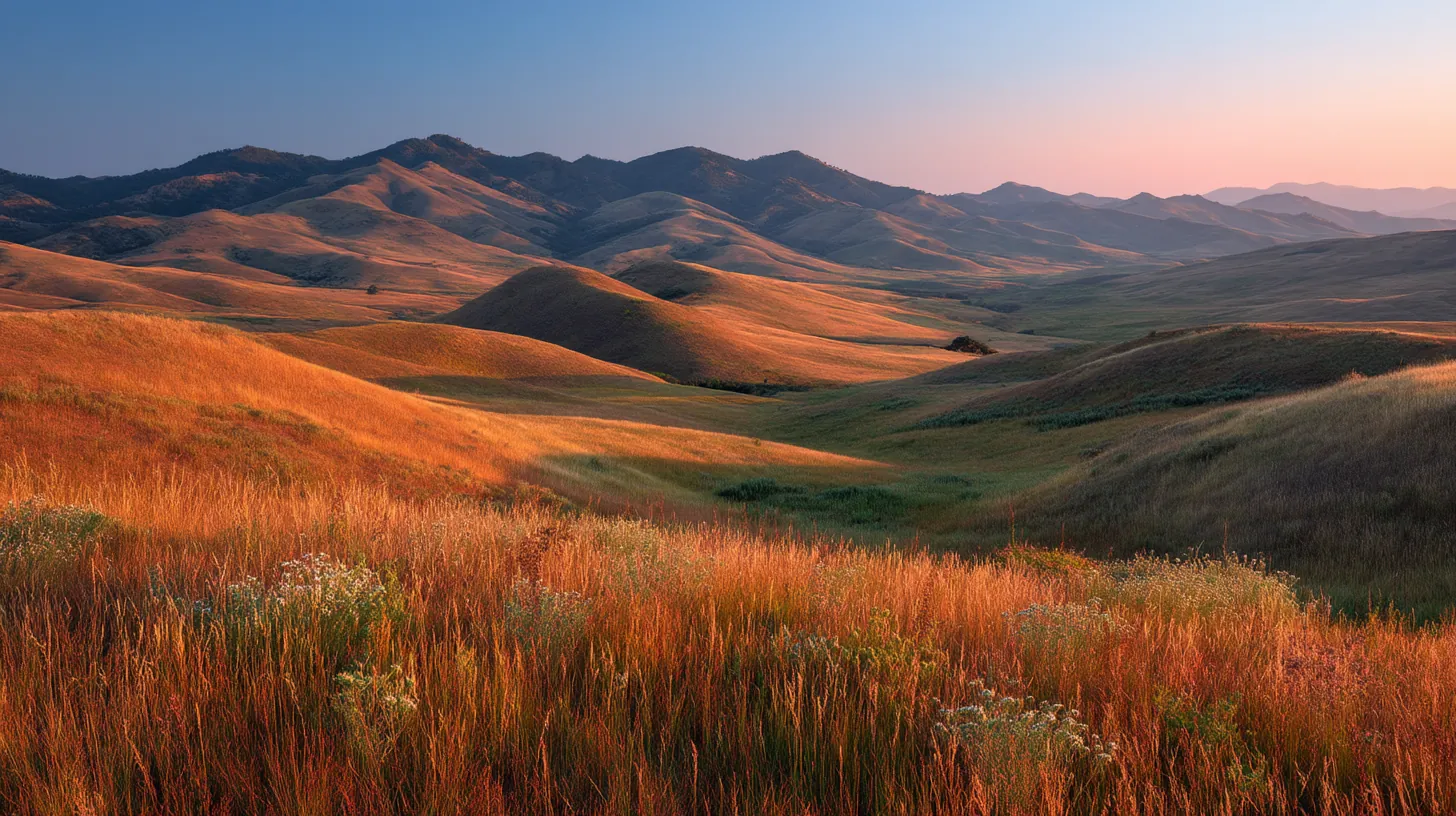
Golden hour rolling hills meadow landscape: Color Temperature: Warm 3000K-4000K golden light washing over grass. Foreground: Wild grass and wildflowers with warm golden highlights. Midground: Gentle rolling hills with soft contours catching side light. Background: Distant hills fading into atmospheric haze. Sky: Gradient from warm orange at horizon to cool blue overhead. Highlights: Warm peachy-gold tones on lit surfaces. Shadows: Cool blue complementary shadows creating depth. Overall: High color saturation, rich warm/cool contrast --ar 16:9 --style raw --s 150 --q 2
Blue Hour (Twilight):
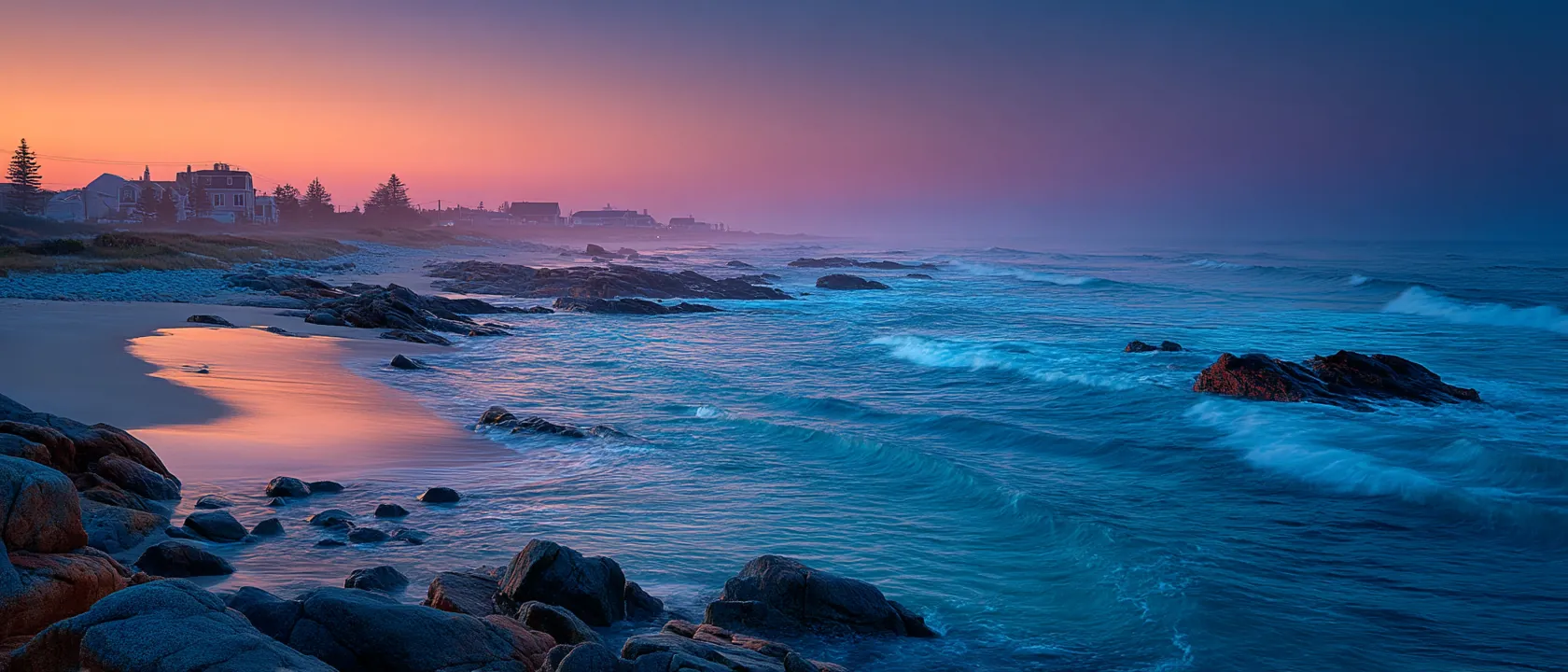
Blue hour coastal scene at twilight: Color Temperature: Cool 8000K-12000K blue light. Foreground: Rocky shoreline with cool blue tones. Midground: Calm ocean water reflecting twilight sky colors. Background: Distant coastline silhouettes. Sky: Deep saturated blues fading to warm orange/pink at horizon. Overall Tone: Cool blue cast, muted earth tones, serene mood. Shadows: Deep blue-violet tones, soft transitions --ar 21:9 --style raw --q 2
Overcast/Cloudy Light:
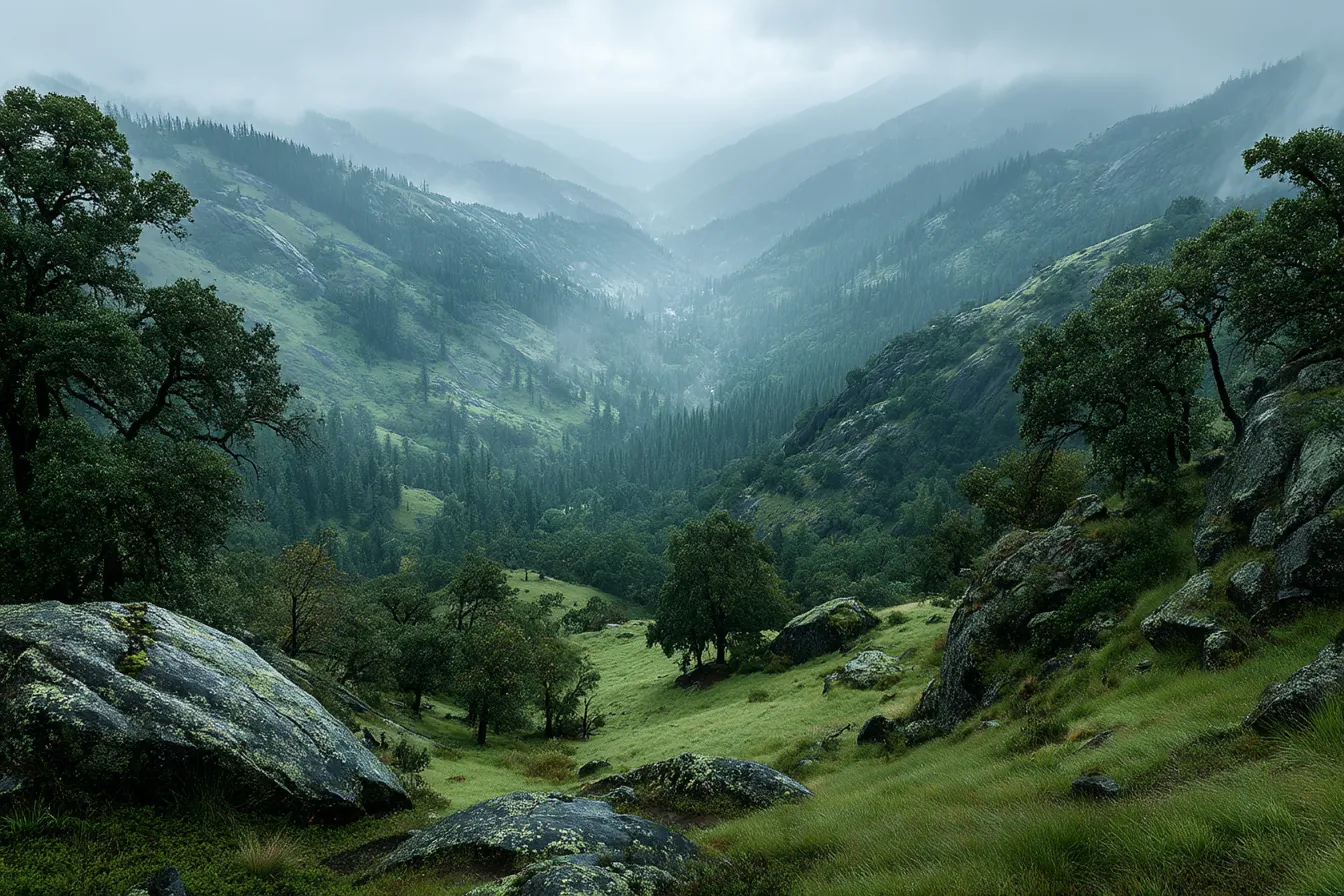
Overcast misty valley landscape: Color Temperature: Neutral 5500K-6500K diffused light creating even illumination. Foreground: Rain-dampened rocks and moss with muted greens. Midground: Rolling valley floor with desaturated grassland and scattered trees. Background: Fog-obscured distant ridges fading into grey atmosphere. Colors: Desaturated, muted earth tones, rich greens with grey cast. Contrast: Low contrast, soft shadows, even illumination throughout. Mood: Moody, atmospheric, subtle color gradients from dark foreground to light sky --ar 3:2 --style raw --q 2
Color Palette Techniques:
- Reference specific Kelvin temperatures (3000K, 5500K, 8000K) for accuracy
- Use complementary color contrast: warm highlights + cool shadows
- Specify saturation levels: "muted earth tones," "rich saturated colors"
- Reference photography styles: "Ansel Adams tonal range," "Peter Lik color treatment"
- Avoid generic terms like "vibrant" - use specific palette descriptions
Advanced Color Control:
- "Teal and orange color grading" - Cinematic landscape treatment
- "Muted pastel dawn colors" - Soft morning light
- "Deep saturated sunset palette" - Dramatic golden hour
- "Cool blue-green forest tones" - Natural woodland atmosphere
- "Warm sepia tones with desaturation" - Vintage landscape aesthetic
Combine with --style raw and low --stylize values (0-150) for photographic color accuracy.
Composition Elements
Understanding which elements work best in each depth layer helps create balanced, believable landscapes.
Composition Elements
Layer Your Descriptions
Build landscape prompts systematically from general to specific for consistent, professional results.
1. ENVIRONMENT TYPE    → "Alpine mountain landscape" / "Coastal cliff scene" / "Redwood forest"
2. TIME & LIGHTING     → "at golden hour" / "blue hour twilight" / "overcast morning"
3. FOREGROUND LAYER    → Specific details: rocks, flowers, texture (sharp focus, high detail)
4. MIDGROUND LAYER     → Transitional elements: trees, formations (receding depth)
5. BACKGROUND LAYER    → Distant features with atmospheric fade (soft, hazy, muted)
6. ATMOSPHERE & SKY    → Lighting quality, weather, clouds, color palette
7. TECHNICAL STYLE     → "Professional landscape photography" / "Fine art nature"
8. CAMERA REFERENCE    → Lens type (24mm wide, 70mm telephoto), depth of field
9. PARAMETERS          → --ar [ratio] --style raw --s [value] --q 2
Example Application:
1. Coastal cliff landscape
2. at dramatic sunset
3. Foreground: Rugged weathered rock formations, coastal grasses,
   barnacle-covered boulders, sharp detail
4. Midground: Tall sea stacks rising from turquoise ocean,
   white foam crashing around bases
5. Background: Layered headlands fading into atmospheric haze,
   cool blue distance
6. Atmosphere: Warm orange-pink sunset glow, backlit sea spray,
   gradient sky from orange to deep purple
7. Style: Fine art seascape photography
8. Camera: 70mm telephoto compression, f/11 depth of field
9. --ar 21:9 --style raw --s 150 --q 2
This structure ensures you include all essential elements for depth, atmosphere, and photographic quality.
Troubleshooting
Prompt Templates
Use these structures to build effective landscape prompts for different environments.
Universal Landscape Template
[Environment type] landscape at [time of day/lighting condition]:

Environment:
- **Foreground**: [Specific elements with texture details]
- **Midground**: [Transitional elements, specify depth/spacing]
- **Background**: [Distant features with atmospheric fade]
- **Sky**: [Cloud types, color, atmospheric conditions]

Atmosphere:
- **Lighting**: [Light quality, direction, temperature]
- **Weather**: [Conditions, visibility, moisture]
- **Effects**: [Atmospheric phenomena, light interaction]
- **Color Palette**: [Specific colors, saturation, contrast]

Technical:
- **Style**: [Photography style reference]
- **Camera**: [Lens type, aperture, depth of field]
- **Details**: [Critical textures and features]
--ar [ratio] --style raw --s [0-300] --q 2
Dramatic Mountain Template
Epic [alpine/mountain/peak] landscape at [golden hour/sunset/dawn]:

Environment:
- **Foreground**: [Wildflower meadow/rocky terrain] with [specific flora],
  [detail elements like boulders, streams]
- **Midground**: [Pine forest treeline/rocky slopes] transitioning to
  [elevation change description]
- **Background**: [Snow-capped/jagged/layered] peaks fading into
  atmospheric haze with [color description]
- **Sky**: [Dramatic/clear/partly cloudy] with [cloud types and placement]

Atmosphere:
- **Lighting**: [Warm golden/cool blue/dramatic] light creating
  [rim lighting/shadows/highlights] on peaks
- **Weather**: [Clear/partly cloudy/storm approaching] with
  [visibility conditions]
- **Effects**: Volumetric light rays, atmospheric perspective,
  [mist/haze/clarity]
- **Color Palette**: [Warm golds and cool blues/muted earth tones/etc]

Technical:
- **Style**: Professional landscape photography, National Geographic quality
- **Camera**: Wide-angle lens (24mm), f/16 for deep depth of field
- **Details**: Sharp foreground detail, progressive softness toward distance
--ar 16:9 --style raw --s 150 --q 2
Coastal/Water Template
[Dramatic/serene] coastal [cliffs/beach/seascape] at [sunset/dawn/twilight]:

Environment:
- **Foreground**: [Rocky cliff edge/sandy beach/tide pools] with
  [weathered rock/shells/specific textures], [vegetation if applicable]
- **Midground**: [Sea stacks/waves/rock formations] with
  [water motion: crashing/flowing/still], [foam/spray patterns]
- **Background**: [Layered headlands/distant coast/open ocean]
  fading into [misty distance/horizon], [atmospheric description]
- **Water**: [Color gradient: turquoise to deep blue/grey/etc],
  [surface conditions: calm/choppy/dramatic]

Atmosphere:
- **Lighting**: [Warm sunset/cool twilight/dramatic storm] light,
  [backlit spray/reflections/surface highlights]
- **Weather**: [Clear/stormy/misty] with [cloud formations]
- **Effects**: Sea mist, backlit spray, [long exposure water/sharp motion]
- **Color Palette**: [Ocean blues, warm sunset tones, cool greys]

Technical:
- **Style**: Fine art seascape photography, [specific photographer aesthetic]
- **Camera**: [Telephoto 70mm compression/wide 24mm], [aperture for effect]
- **Details**: Sharp rock texture, [silky water motion/frozen spray],
  rich color gradients
--ar 21:9 --style raw --s 150 --q 2 --chaos 15
Forest/Woodland Template
[Ancient/dense/mystical] [redwood/pine/deciduous] forest at [dawn/dusk/midday]:

Environment:
- **Foreground**: Forest floor with [moss-covered logs/ferns/wildflowers],
  [leaf litter/rocks/specific ground cover]
- **Midground**: [Massive/tall/varied] tree trunks receding into depth,
  [spacing variation], [understory vegetation]
- **Background**: Forest depth with [morning mist/atmospheric haze]
  obscuring distant trees, [light filtering through]
- **Canopy**: [Tall/dense/filtered] canopy with [light condition:
  god rays/dappled/diffused]

Atmosphere:
- **Lighting**: [Soft dawn/dramatic god rays/even overcast] light
  with [beam quality and direction]
- **Weather**: [Morning mist/clear/humid atmosphere] at ground level
- **Effects**: Volumetric light beams, atmospheric scattering,
  [dust motes/soft diffusion]
- **Color Palette**: Rich greens, [warm amber light/cool blue shadows],
  earth tones

Technical:
- **Style**: Cinematic nature photography, [specific aesthetic reference]
- **Camera**: 50mm standard lens, medium depth of field (f/8)
- **Details**: Bark texture on trunks, [light interaction elements],
  layered depth through trees
--ar 4:5 --style raw --s 150 --q 2
Template Usage Tips:
- Replace bracketed sections with specific choices for your scene
- Layer details from general to specific in each section
- Always specify atmospheric fade in background elements
- Include camera/lens references to control perspective and depth
- Use
--style rawwith low--svalues (0-150) for photorealism - Add
--chaos 15-25for natural variation in organic elements
Conclusion
Mastering natural landscape creation in Midjourney is about understanding how depth layers, atmospheric conditions, and photographic language work together. The key is:
- Build depth with three distinct layers (foreground detail → midground transition → background atmosphere)
- Control atmosphere through lighting quality (golden hour, blue hour, twilight) and weather conditions
- Use photography terms (lens focal length, f-stops, exposure effects) to guide rendering style
- Specify natural details (flora, rock formations, water behavior) for scale and realism
- Layer atmospheric effects (haze, mist, light rays) to create believable spatial recession
Start with the examples in this guide, experiment with different terrain types and lighting conditions, and build a library of prompts that capture the natural beauty you envision.
Next Steps:
- Explore Cityscapes for cityscape and architectural scenes
- Check Interior Spaces for enclosed environment design
- Visit Environment Overview for the complete environments guide
Related Articles & Guides
 #Midjourney
Midjourney Environment Prompts: Master Creation & Design
Learn to create stunning environments in Midjourney with this comprehensive guide. Explore techniques for natural landscapes, urban settings, and interior spaces using effective prompts.
Nature Photography SREF Codes
Professional nature and wildlife photography SREF codes for Midjourney including landscapes, wildlife, macro, and botanical photography.
 #Midjourney
Mastering Midjourney Prompts: Create Stunning Interior Spaces
Master Midjourney prompts to create stunning interior spaces. Learn to define architectural elements, lighting, materials, and composition for breathtaking interior environments.