
Three years ago, AI code assistants were a novelty — GitHub Copilot was the only name in town and using it felt like magic. In 2026, they're infrastructure. Every developer at every company has access to at least one. The question isn't whether to use one — it's which one, how many, and at what cost.
This is the landscape as of mid-2026: who's winning, who's losing, and what's coming next.
The Market Map
AI code assistants have split into four categories. They overlap, but each has a distinct center of gravity:
| Category | Examples | Primary User | Key Differentiator |
|---|---|---|---|
| IDE-native | GitHub Copilot, Cursor, Windsurf, Continue.dev | All developers | In-editor, zero friction |
| CLI agents | Claude Code, Gemini CLI, OpenCode, Codex CLI | Senior devs, platform teams | Terminal-first, autonomous control |
| Enterprise platforms | Amazon Q, Tabnine, Cody (Sourcegraph), Augment | Large orgs, regulated industries | Compliance, on-prem, codebase-wide |
| Open source agents | OpenCode, Aider, Cline, Roo Code | Privacy-first devs, OSS maintainers | Flexibility, BYO-model |
The categories are blurring. GitHub Copilot added agent mode. Cursor added terminal agent capabilities. OpenCode ships a desktop app and IDE extension alongside its terminal tool. The direction is convergence — every tool wants to be the only tool you use.
GitHub Copilot: Still the Default
GitHub Copilot remains the market leader by user count, with over 2 million paid subscribers as of early 2026. Its advantage isn't features — it's distribution. Every GitHub user sees the Copilot upsell. Every enterprise that buys GitHub gets Copilot bundled into the negotiation.
What it does well: Inline completions. Copilot's tab-to-accept flow is the fastest path from thought to code for boilerplate work — typing function fetchUser and watching the function body appear. For the 80% of coding that's predictable, Copilot is still the best at doing it invisibly.
Where it's slipping: Agent mode. Copilot's agent capabilities lag behind Claude Code and OpenCode. Multi-file edits, autonomous debugging, and complex refactors don't work as smoothly. The gap is noticeable enough that developers are adding a second tool rather than upgrading Copilot tiers.
Pricing: Individual $10/month, Business $19/user/month, Enterprise $39/user/month. Free tier available for verified students, teachers, and open source maintainers.
Market position: The 800-pound gorilla. Not the best at anything specific, but the best at being everywhere. As long as GitHub is the default code host, Copilot is the default AI assistant.
Cursor: The Developer's Choice
Cursor started as a VS Code fork with better AI integration and became the IDE that developers actually choose, not the one their company assigned them. It doesn't report subscriber numbers publicly, but estimates from usage data and funding rounds put it at 400,000-600,000 paid users.
What it does well: Agentic editing. Cursor's Composer mode — where the AI reads your entire codebase and makes multi-file changes — set the standard that Copilot and others are now chasing. The UX of seeing proposed changes as a diff, accepting or rejecting file by file, is the clearest implementation of agentic code generation yet.
Where it's slipping: Pricing pressure. At $20/month for Pro, it's competitive. But with OpenCode at $10/month (or $0 if you bring your own keys) and Claude Code's Max plan at $100/month offering better reasoning for complex work, Cursor is squeezed from both sides.
Pricing: Hobby (free, rate-limited), Pro $20/month, Business $40/user/month.
Market position: The quality leader in IDE-native agents. Loved by individual developers, but enterprise adoption is slower — IT departments prefer tools that don't require switching editors.
Windsurf: The Dark Horse
Windsurf (from Codeium) broke out of the "Copilot clone" pack with two things: a genuinely fast agent mode and aggressive free-tier pricing. It's the tool developers recommend when someone asks "what if I don't want to pay $20/month for Cursor?"
What it does well: Speed and pricing. The Cascade agent mode is responsive in a way that makes the tool feel faster than competitors. The free tier is generous enough that many developers never upgrade.
Where it's slipping: Model quality. Windsurf uses its own models, and on complex reasoning tasks — architectural decisions, multi-step refactors, debugging subtle logic errors — the quality gap vs Claude Code or Cursor with Claude is noticeable.
Pricing: Free tier (50 premium requests/month), Pro $10/month, Teams $23/user/month.
Market position: Best value for money. If your AI coding needs are "complete this function" and "fix this TypeScript error," Windsurf does it for less. If you need deep reasoning, you'll supplement it.
Claude Code: The Architect
Claude Code is the tool developers reach for when the task isn't writing code — it's understanding code. Anthropic's strength in reasoning translates directly into a CLI agent that excels at analysis, refactoring, and debugging.
What it does well: Complex reasoning. "Trace the authentication flow through this 50-file codebase and explain the design decisions" — Claude Code handles this better than any other tool. It reads and understands code, not just pattern-matches.
Where it's slipping: Ecosystem lock-in. Claude Code only works with Claude models. You can't use GPT-5 or Gemini 3 through it. For teams that want model flexibility, this is a dealbreaker.
Pricing: Pro $20/month, Max $100/month (individual), Max $200/month (teams). No free tier for the CLI — you need at least Pro.
Market position: The premium option for developers who value reasoning depth over breadth. Not competing on user count — competing on the quality of output for the hardest problems.
Gemini CLI: The Big Picture
Google's Gemini CLI entered the market with one clear advantage: context window. Gemini 3 Flash supports 2 million tokens — roughly 10x what Claude Code offers. For monorepo work and whole-codebase analysis, this changes the game.
What it does well: Scale. Load your entire codebase into context and the agent can reason across every file without selective loading or chunking. The free tier is genuinely useful — Google AI Studio API keys work with generous rate limits.
Where it's slipping: Reasoning depth. Gemini models are fast and handle large context well, but on subtle logic problems and architectural decisions, Claude still leads. For daily coding that requires precision over scale, developers often switch tools.
Pricing: Free with AI Studio API key. Vertex AI pay-per-use for heavier workloads (~$10-30/month for active developers).
Market position: The best tool for large-scale codebase work. The free tier makes it the best tool for trying agentic coding without committing money.
OpenCode: The Open Alternative
OpenCode is the only fully open source option with significant adoption — 160K+ GitHub stars, 900+ contributors, and over 7.5M monthly developers. Its strategy is fundamentally different from the others: build the best agent framework, let the user bring the model.
What it does well: Provider flexibility. 75+ LLM providers — Claude, GPT, Gemini, local models — all from the same tool. If you already pay for ChatGPT Plus or Claude Pro, OpenCode costs $0 extra. The privacy story is strong: no code or context data is stored.
Where it's slipping: Newer and rougher edges. The UX is improving fast but still less polished than Cursor or Copilot. Configuration takes more effort — setting up multiple providers, custom tools, and per-project configs is not "it just works."
Pricing: Zen free tier + pay-as-you-go ($10 min), Go $10/month. Can also use existing subscriptions from other providers.
Market position: The independence play. Best for developers who refuse vendor lock-in, value privacy, or want to experiment with models without switching tools.
Continue.dev: The IDE-Agnostic Layer
Continue.dev takes the opposite approach from Cursor — instead of building a new IDE, it works inside VS Code and JetBrains. It's the AI layer on top of your existing editor, not a replacement for it.
What it does well: Model choice without tool switching. Bring any model (Claude, GPT, local) into your existing VS Code or JetBrains setup. Open source. The configuration is declarative — a config.json or config.ts file, committed to the repo alongside the code.
Where it's slipping: Mindshare. Cursor captured the "IDE with AI" narrative. Continue.dev is the better choice for developers who don't want to switch editors, but it doesn't have Cursor's marketing or community momentum.
Pricing: Free and open source. Revenue comes from enterprise support and managed cloud features.
Market position: The power user's choice. Developers who have strong opinions about their editor setup and want AI that adapts to their workflow, not the other way around.
Enterprise: A Different Game
Enterprise AI code assistant decisions look nothing like individual developer choices. The priorities are different:
| Individual Dev Prioritizes | Enterprise Prioritizes |
|---|---|
| Best AI completion quality | Data privacy — code must stay in-house |
| Lowest price | Compliance — SOC 2, GDPR, EU AI Act readiness |
| Fastest onboarding | On-premise or VPC deployment |
| Most flexible model choice | Codebase-wide search and indexing |
| Coolest features | Bulk pricing, SSO, audit logs |
This is why Amazon Q (bundled with AWS), Tabnine (on-premise, trained on private code), Cody by Sourcegraph (codebase-wide context), and Augment (enterprise code intelligence) all exist — and why none of them compete with Copilot on consumer features.
For regulated industries — healthcare, finance, defense — these enterprise tools are the only option. And they're growing, quietly, as compliance requirements tighten. For what those requirements actually demand from a developer shipping on top of an LLM API, see our AI regulations & compliance guide.
Trends Shaping the Market
1. Agentic coding is the new baseline. 2024 was "tab to complete." 2025 was "chat with your codebase." 2026 is "the agent edits your codebase." Every tool is adding agent mode. The differentiator is how well the agent handles failure — does it silently break things, or does it detect and recover?
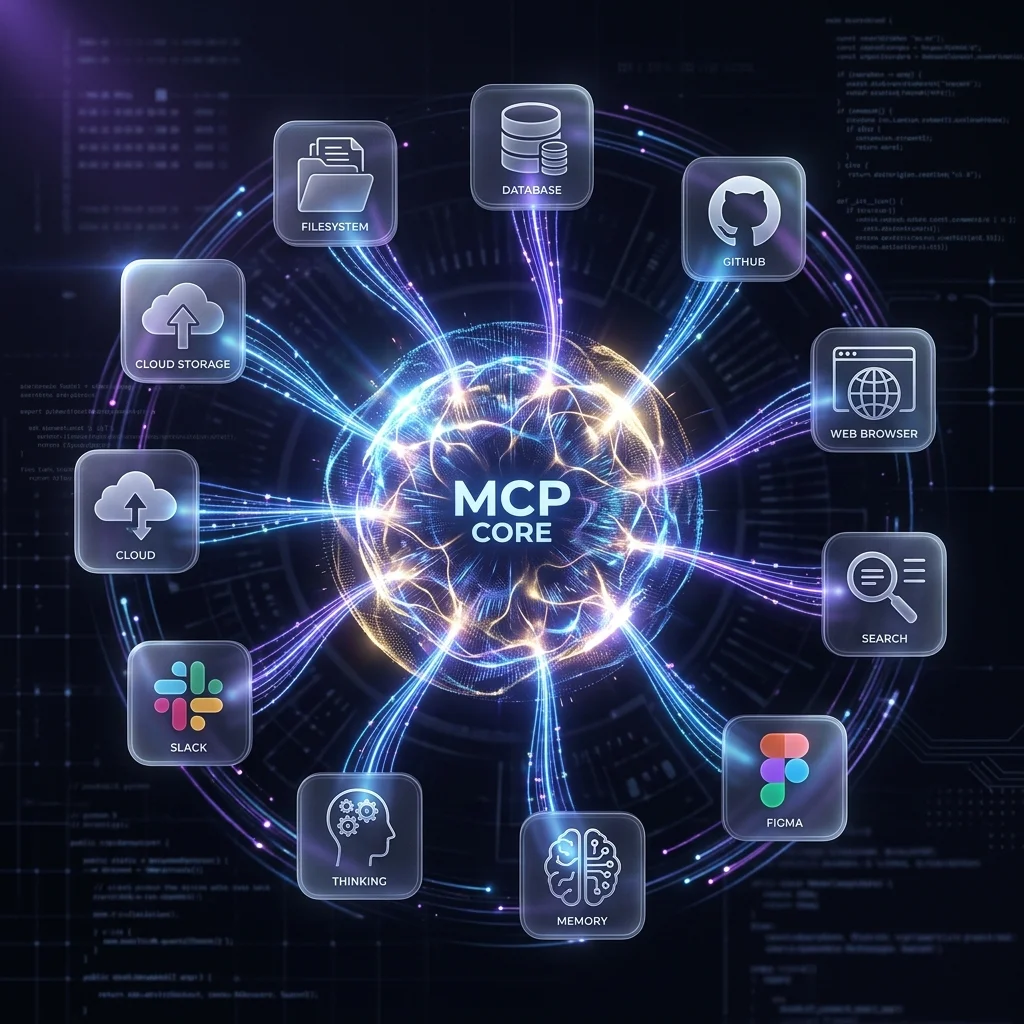
2. MCP is becoming a standard. The Model Context Protocol — originated by Anthropic for Claude Code — is being adopted across tools. GitHub Copilot, Gemini CLI, and OpenCode all support it. MCP servers are the equivalent of IDE extensions for AI agents, and the ecosystem is growing faster than any one company's proprietary integrations.
3. Privacy as competitive moat. OpenCode's "no code stored" stance is not just a feature — it's a wedge issue. As enterprises get serious about AI compliance, the privacy story becomes a buying decision. Expect more tools to emphasize local processing and zero-data-retention policies.
4. Multi-model is winning. The tools that lock you into one model (Claude Code, Gemini CLI) have ceiling problems. The tools that let you bring any model (OpenCode, Continue.dev, Cursor) give users an escape hatch. When a new model ships with better coding performance, single-model tools have to wait for their vendor to catch up.
5. The terminal is back. After a decade of IDEs absorbing everything, the terminal is re-emerging as the power user's interface for AI. Claude Code, Gemini CLI, and OpenCode are all terminal-first. The pattern: use an IDE-native tool for line-by-line completion, use a CLI agent for tasks that require reasoning across the codebase.
What's Losing
Single-model, single-editor tools. The combination of limited model access AND limited editor support is a narrowing market. Tools that only work in one IDE with one vendor's models are getting squeezed.
Free-but-limited tools. The market is settling into a pattern: free tier for trying, $10-20/month for daily use, $100+/month for heavy autonomous work. Tools that try to monetize through usage caps instead of subscriptions are losing to tools that offer uncapped subscriptions.
Tab completion without agent capabilities. If your AI assistant only does inline completions in 2026, you're a feature, not a product. Copilot, Cursor, and Windsurf all added agent modes. Tools that haven't are losing users to the ones that have.
Predictions for 2027
Consolidation. The number of funded AI code assistant startups will drop. The market can support 5-7 major players, not 20. Expect acquisitions and shutdowns.
Agent quality as the battleground. Completion quality has plateaued — GPT-5, Claude 4, and Gemini 3 all produce good suggestions. The fight moves to agent reliability: which tool can autonomously complete a multi-file refactor without breaking the build?
Enterprise compliance as the growth vector. Selling to individual developers is a volume game with low margins. Selling compliance-ready AI assistants to enterprises is where the revenue is. Expect every consumer tool to launch an enterprise tier.
The IDE becomes less relevant. When the agent handles file navigation, code generation, and testing, the IDE becomes a viewport for the agent's output, not the primary interface. The terminal agent trend is the leading indicator.
Quick Reference
| Tool | Category | Starting Price | Free Tier | Best For |
|---|---|---|---|---|
| GitHub Copilot | IDE-native | $10/mo | Students | Inline completion, GitHub integration |
| Cursor | IDE-native | $20/mo | Limited | Agentic multi-file editing |
| Windsurf | IDE-native | $10/mo | 50 req/mo | Best value, responsive agent |
| Claude Code | CLI agent | $20/mo | No | Complex reasoning, refactors |
| Gemini CLI | CLI agent | Free | Yes | Large codebases, context-heavy |
| OpenCode | Open source CLI | $10/mo | Yes | Model flexibility, privacy |
| Continue.dev | IDE-agnostic | Free | Yes | Existing editors, model choice |
| Amazon Q | Enterprise | $19/user/mo | No | AWS shops, compliance |
| Tabnine | Enterprise | $12/user/mo | No | On-premise, private training |
| Cody (Sourcegraph) | Enterprise | $9/user/mo | Free | Codebase-wide context, search |
For deep dives on individual CLI agents, see our comparison of Claude Code vs Gemini CLI vs OpenCode, the OpenCode guide, and Mastering Gemini CLI. For the open-source community's reaction to AI-generated code, see why Godot banned AI-authored contributions.
Related Articles & Deep Dives
 #agent-skills
Cross-Platform Agent Skills: Writing Universal SKILL.md for Antigravity, OpenCode & Claude Code
A complete guide to authoring portable Agent Skills that run seamlessly across Google Antigravity, OpenCode, Claude Code, and Cursor without rewrite.
 #claude-code
Claude Code Burns 33,000 Tokens Before Your Prompt Arrives — We Counted Every One
A systima.ai API-level analysis reveals Claude Code sends 33k tokens of system prompt and tool schemas per request vs 7k for OpenCode. Cache instability makes it worse — up to 54x more cache writes. Here's what it means for your daily workflow.
 #mcp
#mcp10 MCP Servers Every Developer Needs
The essential Model Context Protocol servers for AI coding agents — GitHub, Postgres, Filesystem, Brave Search, Figma, and more — with setup instructions for Claude Code, Gemini CLI, and OpenCode.