Sequential Thinking MCP Server: AI Step-by-Step Problem Solving
Sequential Thinking MCP servers enable AI models to perform structured, step-by-step problem-solving with support for thought revision, branching reasoning, and dynamic context management.



Overview
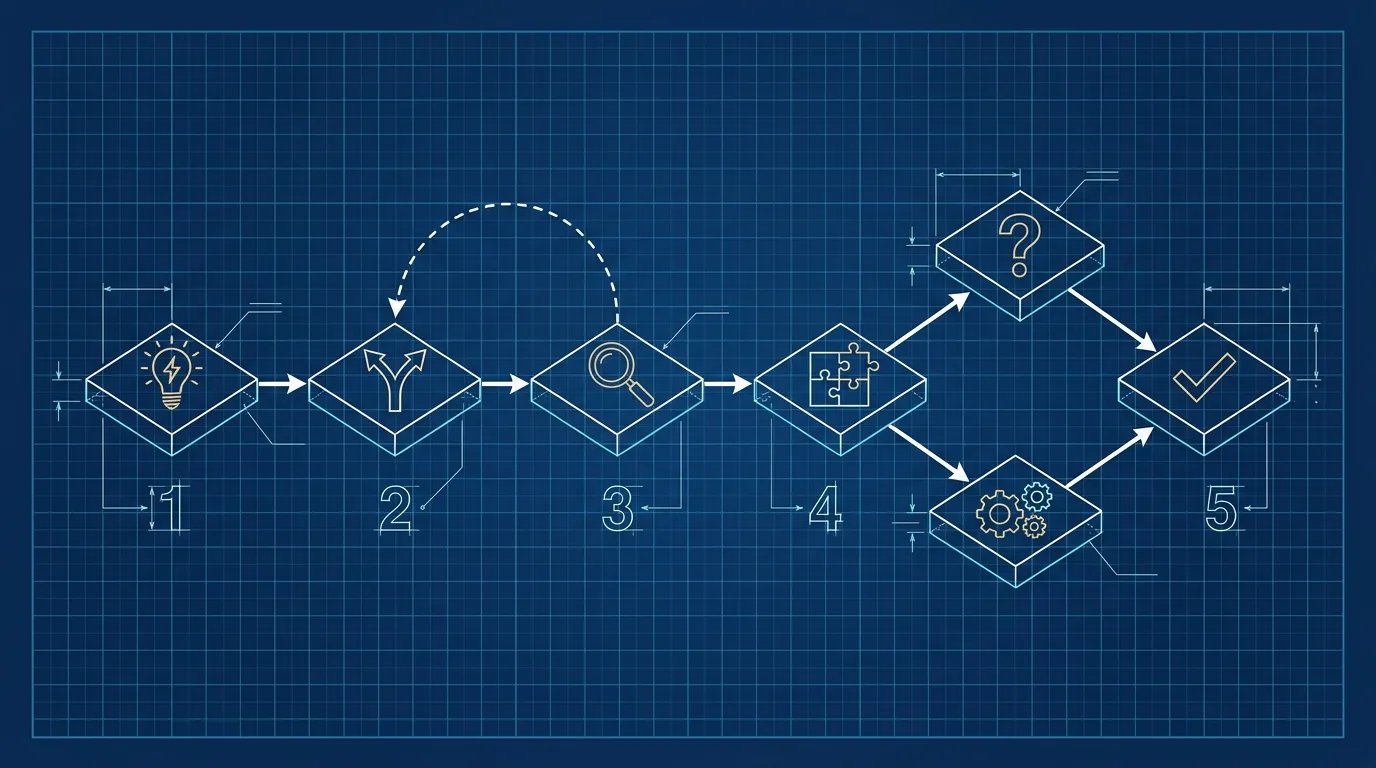
The Sequential Thinking MCP Server enables AI models to perform structured, step-by-step problem-solving through a standardized MCP interface. It provides tools for breaking down complex problems, revising thoughts, exploring alternative reasoning paths, and maintaining context over multiple thinking steps. For more details, explore its Key Features, learn about Available Tools, and find Installation instructions. You can also see Common Use Cases.
Official Server:
Developed and maintained by Model Context Protocol
Key Features
Step-by-Step Breakdown
Divide complex problems into manageable thinking steps
Thought Revision
Revise and refine previous thoughts as understanding deepens
Branching Reasoning
Explore alternative thinking paths from specific decision points
Dynamic Adjustment
Adjust total thought count based on problem complexity
Available Tools
Quick Reference
| Tool | Purpose | Category |
|---|---|---|
sequential_thinking | Perform structured step-by-step thinking | Problem-Solving |
Detailed Usage
sequential_thinking▶
Facilitates a detailed, step-by-step thinking process for problem-solving and analysis.
// Initial thought step
use_mcp_tool({
  server_name: "sequential-thinking",
  tool_name: "sequential_thinking",
  arguments: {
    thought: "First, we need to understand the problem requirements.",
    thoughtNumber: 1,
    totalThoughts: 5,
    nextThoughtNeeded: true
  }
});

// Revised thought
use_mcp_tool({
  server_name: "sequential-thinking",
  tool_name: "sequential_thinking",
  arguments: {
    thought: "Actually, we need to clarify the problem requirements first.",
    thoughtNumber: 1,
    totalThoughts: 5,
    nextThoughtNeeded: true,
    isRevision: true,
    revisesThought: 1
  }
});

// Branching thought
use_mcp_tool({
  server_name: "sequential-thinking",
  tool_name: "sequential_thinking",
  arguments: {
    thought: "Let's explore an alternative approach.",
    thoughtNumber: 3,
    totalThoughts: 5,
    nextThoughtNeeded: true,
    branchFromThought: 2,
    branchId: "alternative-approach"
  }
});
Supports thought revision, branching, and dynamic thought count adjustment.
Installation
{
  "mcpServers": {
    "sequential-thinking": {
      "command": "npx",
      "args": [
        "-y",
        "@modelcontextprotocol/server-sequential-thinking"
      ]
    }
  }
}
Common Use Cases
1. Complex Problem Solving
Break down multi-faceted problems into manageable steps:
// Define initial thinking step for algorithm design
use_mcp_tool({
  server_name: "sequential-thinking",
  tool_name: "sequential_thinking",
  arguments: {
    thought: "First, identify the core algorithm requirements and constraints.",
    thoughtNumber: 1,
    totalThoughts: 6,
    nextThoughtNeeded: true
  }
});
2. Iterative Planning
Revise project plans as new information emerges:
// Revise a previous planning thought
use_mcp_tool({
  server_name: "sequential-thinking",
  tool_name: "sequential_thinking",
  arguments: {
    thought: "Revised: Allocate 2 weeks for testing instead of 1 week based on new requirements.",
    thoughtNumber: 3,
    totalThoughts: 5,
    nextThoughtNeeded: true,
    isRevision: true,
    revisesThought: 3
  }
});
3. Alternative Analysis
Explore different solution paths:
// Branch into alternative approach
use_mcp_tool({
  server_name: "sequential-thinking",
  tool_name: "sequential_thinking",
  arguments: {
    thought: "Alternative approach: Use machine learning instead of rule-based system for classification.",
    thoughtNumber: 4,
    totalThoughts: 7,
    nextThoughtNeeded: true,
    branchFromThought: 3,
    branchId: "ml-alternative"
  }
});
Sources
Related Articles & Guides
HuggingFace MCP Server
HuggingFace MCP server provides AI assistants with access to the model hub — search 1M+ models, discover datasets, explore Spaces, read papers, and fetch documentation directly through MCP.
MiniMax MCP Server
Integrate MiniMax's AI models and capabilities with your AI assistants through the official MiniMax MCP Server for text generation, voice synthesis, and more.
 #MCP Server
Ollama Deep Researcher: AI Model for Web Search & LLM Synthesis
Ollama Deep Researcher MCP servers enable AI models to perform advanced topic research using web search and LLM synthesis, powered by a local MCP server.